CIMPA, an EU-funded H2020 project, aimed to develop a recycling chain for post-industrial and post-consumer multilayer films from food and agricultural applications. This complex approach combines innovative compositional sorting, mechanical and physical recycling and an advanced decontamination process.
The consortium CIRCULAR FoodPack worked on solutions to enable the circular use of plastic packaging, focusing on the most sensitive product category: food. The project aimed to develop recyclable packaging with at least 50% post-consumer recyclates incorporated behind a functional barrier.
The European Commission is carrying out an impact assessment in preparation for the revision of the Waste Framework Directive. You have until 16 August to tell the European Commission what you think about waste management and its environmental impact!
Coffeefrom is an innovative project from Italy. It recovers coffee grounds from the food industry and blends them with biopolymers to form a new bio-based material that is a durable and resistant alternative to single-use plastic.
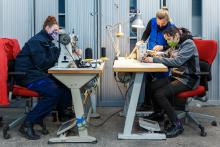
remesh is a socio-professional business workshop with an environmental impact. Most of its employees are women from disadvantaged background. The workshop is also providing a circular economy business model as they reuse advertising banners and meshes to make new products that are fashionable but sustainable.
The EU-funded OLEAF4VALUE project set up a consortium of highly experienced partners to develop a valorisation system for the olive leaves biomass. The consortium addressed all levels of the value chain: raw material, biorefining, post-extraction technologies, market validation and sustainability assessment.
One major issue at the moment is making the EU less reliant on Russia.
This paper from the CEPS Think thank provides insights on Russia’s share among EU sources of key supplies for low-carbon technologies. It looks at prospects for meeting future material demands through circularity for three technologies: lithium-ion batteries, wind turbines and fuel cell electric vehicles.
WaVa - Co-products Marketplace is a chemical exchange platform where professionals can sell their manufacturing co-products or buy raw materials. It matches up supply and demand.
Any industrial raw material, waste, by-product or manufacturing co-product can be traded on the WaVa platform, but its chief focus is managing and processing chemical by-products. It aims to help people achieve their circular economy objectives and thus reap the economic and environmental benefits.
WaVa is not recognised as a waste disposal facility; it simply connects buyers and sellers. It never actually takes ownership of the product.