Ms. Bay is a handbag brand that creates products made of rescued waste material and following fair-trade manufacturing ethics. The main material in their collection is salmon-leather. This has qualities similar to regular leather but is processed in a more environmental-friendly way and is highly durable.
Versalis produces plastics, rubbers and chemicals from renewable sources, maintaining plastic products and materials in a closed loop. It has developed the Versalis Revive® range of polymer-based products containing recycled plastics, in collaboration with leading Italian companies in the recovery and recycling of post-consumer plastic at European level.
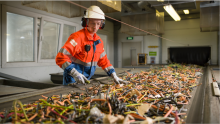
RecyCâbles is a joint venture between Suez and Nexans started in 2008 that collects, recovers and processes used cables. The recycling and re-use of cable materials keeps them in the economic loop.
A solvent-free adhesive that is suitable for recycling and also for bonding of recycled plastic films has been developed by Henkel to be used for multilayer packaging.
The Donar company was established in 1989 in Slovenia, as demand for office interior development was growing. Starting as a small business, Donar has developed into one of the key players in design furniture with the highest environmental standards.
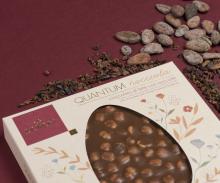
In line with a circular economy strategy, the company Favini and chocolatiers Domori have developped an industrial symbiosis system to produce the ecological paper Crush Cocoa from cocoa processing waste.