The Circular City Centre - C3 is a competence and resource centre led by the European Investment Bank and co-funded by the European Commission as part of the Circular Cities and Regions Initiative. It helps cities make circular progress and identify and prepare sound circular projects for financing.
The ENDURANCE project has produced a handbook setting out a green acceleration methodology with defined, transferable and effective acceleration scenarios. These will serve as a roadmap for other European clusters, regardless of their sector of industrial activity.
The aim is to promote the transition towards a clean, circular and climate-neutral economy.
The CIRCit research project aimed to help Nordic industry learn about and implement circular opportunities by developing, testing and implementing science-based tools.
It focused on six areas, and produced workbooks setting out tools and guidelines for the transition to a circular economy.
Companies in the electronics sector are stepping up their efforts to move to circular business models.
This document describes Circular Transition Indicators (CTI), a metrics framework positioned to be the universal language of circular performance and accountability. CTI enables businesses to assess circularity levels, set improvement targets and monitor progress.
This is a comprehensive guide for businesses aiming to integrate circular business models into their operations with a view to effectively addressing biodiversity loss.
It guides companies through the process of identifying and prioritising their most critical biodiversity impacts.
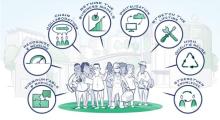
The Procurement Transformation Workshop can be set up by organisations who want to rethink their procurement processes and integrate circularity in their procurement department.
A Biowaste Club is an institutionalised platform for multi-stakeholder engagement whose members are all local and regional actors along the biowaste value chain, such as waste management companies, research institutions, public authorities, etc.
Biowaste Club meetings take place twice a year, set-up and formats can vary, depending on the local needs and, consequently, on their agenda.
This updated playbook by Nordic Innovation, Accenture and Sitra is a guide to circular business models. It is tailored to companies in the Nordic manufacturing industries and describes the key enablers to fully transform and become a circular business.
Using good practices and replicable examples from Europe and beyond, these EU-funded BUS-GoCircular project guidelines aim to raise awareness among practitioners and policymakers about their ability to promote a more circular construction sector and upskill professionals.
Between September 2021 and March 2022, the Circular Economy - Sustainable Competences for Youth project team conducted an online survey, reaching more than 200 young people aged 18-30 across Europe. These findings fed into data used to prepare recommendations advocating better inclusion and opportunities for young people regarding the transition towards a circular economy.