The circular economy is increasingly attracting the interest of business, policy makers and academia in the search for answers to sustainability challenges. While earlier studies have presented drivers that support the introduction of new business concepts for circular economy, as well as barriers that hinder the rate of innovation in the field, no systematic categorisations of such factors have been brought forward.
Drawing on current literature, a framework of drivers and barriers is introduced, including seven distinct areas: environmental, economic, social, political and institutional, technological and informational, supply chain, and organisational factors. The appearance and content of these areas in practice have been examined in four case organisations.
This study delivers the first empirical findings on the relevance of digitisation to improving material efficiency based on the German company survey ‘IW-Zukunftspanel’.
German manufacturing firms have up to now only rarely digitised material efficiency measures to a great extent. If they are - particularly in large companies - they tend to be used for process optimisation. Around two fifths of the companies are at least moderately digitised in relation to the most important industrial efficiency measures, namely process optimisation and the use of new techniques, but there is still more than a third that is not at all. Companies have most frequently digitised cross-company materials cycles, but this instrument is only applied by two fifths of industrial companies.
The Centro de Documentación Europea de la Universidad Francisco de Vitoria (European Documentation Centre, UFV) has completed a project titled Economía Circular y Empleabilidad de los Jóvenes en la Comunidad de Madrid (Circular Economy and Employability of Young People in the Autonomous Region of Madrid).
The outcomes include a report on communicating the circular economy through the lens of employment opportunities circular business models provide for young people. The project has also created a guide on communicating the circular economy to students, which introduces the subject, presents the 7R model and shows how innovative companies provide opportunities for employment in circular business.
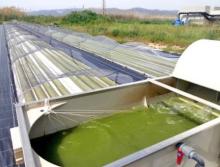
Within the European project INCOVER, an experimental plant uses low-energy photobioreactors to cultivate micro-algae and transform wastewater into bioproducts.
This article describes this new experimental plant and the start-up stage, starting from the new design of three semi-closed horizontal photobioreactors with low energy requirements, for microalgae cultivation (30 m3 total), using agricultural runoff and urban wastewater as feedstock.
The inflow nutrients concentration is adjusted to select cyanobacteria, microalgae able to accumulate polyhydroxybutyrates, which can be used for bioplastics production. Part of the harvested biomass is used as substrate for anaerobic co-digestion (AcoD) with secondary sludge to obtain biogas.
Despite companies face several challenges when redesigning their supply chain for the Circular Economy, current literature lacks a systematisation of such challenges and of the ways to overcome them.
Through a systematic literature review, this paper identifies and identifies 24 challenges that may hamper a supply chain redesign for the Circular Economy. Sixteen of these challenges are well known from research in related topics. On the other hand, the remaining eight are relatively new or take on a different relevance within the Circular Economy context.
A multiple case study in the household appliance supply chain has been carried out to explore how these challenges appear in practice and how companies may tackle them.
The EU Circular Economy Package pushes forward the concepts of ‘recycle, repair and re-use’, as well as waste avoidance. To comply with the Package many EU countries will need a completely new waste treatment system, and many companies will need to re-think some established business models.
Two years after adopting the Circular Economy Package, the EU institutions have finally agreed on a new EU waste regulation. The paper entitled Two years later: the EU Circular Economy Package evaluates recent EU policy moves and decisions. It also analyses the status quo of Germany's circular economy efforts and compares them to those of other EU member states. Finally, some of the risks and opportunities for companies are outlined.
Two years after adopting the Circular Economy Package, the EU institutions have finally agreed on new EU waste rules. Despite lower recycling targets as originally envisaged, most countries still have to push recycling to meet the goals. A single method of determining recycling rates was also decided, but an exemption will continue to allow for disparate recycling rates.
Recycling has become increasingly important in Europe: EU recycling rates increased from 32 to 46 per cent between 2005 and 2016. Yet, more progress is needed to reach the targets.
Circular Economy and Employment first summarizes the main definitions and conceptualisations of a circular economy, then clarifies the relationship to related concepts such as green growth and eco-innovation. This report is the outcome of a project estimating the employment effects of a circular economy.
The Circular Economy mainly focuses on savings on the shares of material, labour, energy, and capital embedded in the product. In finite systems it is intended to “design out waste”. An important difference is made between consumables (one or few time usage) and durables (years of usage) products. Material savings can be achieved by already established recycling and remanufacturing activities finally aiming at a “zero waste economy”.
Textiles waste is relatively small in terms of weight as compared to other waste streams, but it has a large impact on human health and environment, and its rate is increasing due to the ‘fast fashion’ model. In this paper, the authors examine the French national programme for managing post-consumer textiles and clothing through a case study research.
France is the only country in the world implementing an extended producer responsibility (EPR) policy for end-of-use clothing, linen and shoes. The case highlights the benefits of using an EPR policy and provides interesting insights about the challenges faced by the textiles waste sector. For instance, the EPR policy has contributed to a threefold increase in the collection and recycling rates of post-consumer textiles since 2006.
Over the last decade, the concept of the circular economy has regained attention, especially related to efforts to achieve a more sustainable society. The ‘revival’ of the circular economy has been accompanied by controversy and confusion across different actors in science and practice. With this article the authors attempt at contributing to advanced clarity in the field and providing a heuristic that is useful in practice. Initially, they take a focus on the historical development of the concept of circular economy and value retention options for products and materials aiming for increased circularity.
The authors propose to distinguish three phases in the evolution of the circular economy and argue that the concept – in its dominant framing – is not as new as frequently claimed.