This research reviews the long history and diversity of circularity thinking to develop a comprehensive timeline, which identifies and conceptually classifies 72 different CE-related concepts from the Global North and South alike (such as industrial ecology, Gandhian and steady-state economics, buen vivir, doughnut economics, degrowth).
In November 2020 the paper was completed with an interactive timeline that helps researchers and practitioners better situate and navigate the concept of circular economy, both in its rich historical origins and in its theoretical diversity. It thus fosters a cross-pollination of concepts and ideas which can help address the complex socio-ecological challenges of the 21st century.
To learn more about this timeline, please click here.
Textiles and clothing play an important role in our everyday life. But the global fashion industry model is unsustainable. It uses large amounts of resources and has negative impacts on the environment and people. The global fashion industry, therefore, has to make a transition towards a circular model. In a ‘circular’ fashion economy, clothes, textiles, and fibres are kept at their highest value during use and re-enter the economy to avoid becoming waste.
This research note produced by Ecopreneur.eu is a first inventory of the potential impacts of future EU circular fashion on non-European textile producing countries. It uses existing literature and input from four circular economy experts to analyse the economic, social and environmental impacts.
This review paper of Mark Anthony Camilleri examines relevant regulatory guidelines, policies, and recommendations on sustainable development, where it traces the origins of circular economy (CE). It goes on to shed light on key theoretical underpinnings of CE's closed loop and product service systems.
The findings suggest that the CE's regenerative systems minimise the environmental impact as practitioners reduce their externalities, including waste, emissions, and energy leakages through the use and reuse of resources. Therefore, this contribution offers a critique on CE's inherent limitations and discusses about the implications of having regulatory interventions that are intended to encourage responsible consumption and production behaviours.
Today, only 8.6% of the resources and materials in the global economy are reused or recycled.
A crucial transition to a circular economy is required to reach the environmental goals of the 2030 Agenda for Sustainable Development and to achieve countries’ climate targets as set out in the 2015 Paris Agreement.
In this context, it is essential to ensure that the transition to a resource-efficient and circular economic model also delivers on social objectives.
This paper introduces the relevance of the circular economy in the international development SDG context. It also explores how a just transition approach can be successfully applied in the circular economy context.
Research on Remelting and Purification of Si-kerf for PV wafers is part of CABRISS, a European collaboration aimed to develop a circular economy mainly for the photovoltaic but also other industries such as electronics or metallurgy.
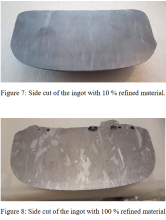
During production of silicon wafers out of silicon (Si) ingots and wafers, about 40–50% of the material is lost due to the cutting technique. The research had kerf from slurry based wafer cuttings undergoing several refining steps and being remelted into ingots for PV-application.
Conclusion: With 10% refined material, ingots were still directionally solidified, whereas with 100% refined material, they were not. The presented refining method does not allow for ingots with 100% refined material to be used as PV-material.
The project Recycling of broken Si based structures and solar cells is part of CABRISS, a European collaboration aimed to develop a circular economy mainly for the photovoltaic (PV), but also for other industries such as electronics or metallurgy.
The paper presents some tests in which broken solar cell structures coming from an early stage in the PV production process chain as well as broken finished solar cells have been recycled into new silicon (Si) feedstock through demetallisation, purification and directional solidification.
The paper explores two different routes to remove diffusion layers and anti-reflection coating (ARC) on broken cells. It also presents the characteristics of ingots produced with the Si-feedstock from the two routes by directional solidification.
In a resource-constrained world the future economy will need to be circular.
From a policy perspective, the question is whether averting catastrophic environmental impacts through an accelerated transition to a global circular economy can also deliver sustained growth and jobs.
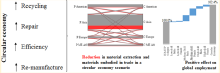
Multiregional input−output (MRIO) analysis models the interdependencies between industries and within/between countries as well as between intermediate and final goods producers and consumers, thus providing a useful toolbox for assessing social, environmental, and economy-wide impacts of the adoption of the circular economy.
This research paper resorts to this toolbox to compare the business-as-usual (BAU) scenario to an alternative circular economy scenario.
Cultural heritage buildings hold a unique niche in the urban landscape, as they embody the local cultural and historic characteristics that define communities. Extending their useful lifespan has multiple benefits that go beyond the project itself to the surrounding area, contributing to sustainable development, but decision-makers lack knowledge of the environmental benefits and tools for adaptive reuse of cultural heritage buildings.
To this end, this article provides a circular economy framework for the adaptive reuse of cultural heritage buildings to reduce environmental impacts. The framework integrates methods and techniques from building and construction literature that aim to reduce lifecycle environmental impact of buildings through a circular product supply chain approach.
The paper provides an overview of the literature on Circular Economy (CE) theoretical approaches, strategies and implementation cases. After analyzing different CE approaches and the underlying principles the paper then proceeds with the main goal of developing tools for CE implementation. Two tools are presented: a CE Strategies Database, which includes 45 CE strategies that are applicable to different parts of the value chain and secondly a CE Implementation Database, which includes over 100 case studies categorized by Scope, Parts of the Value Chain that are involved, as well as by the used Strategy and Implementation Level. An analysis of the state of the art in CE implementation is also included in the paper.
Circular economy increasingly attracts the interest of business, policy makers and academia in the search for answers to sustainability challenges. While earlier studies have presented drivers that support the introduction of new business concepts for circular economy, as well as barriers that hinder the rate of innovation in the field, no systematic categorizations of such factors have been brought forward.
Drawing on current literature, a framework of drivers and barriers is introduced, including seven distinct areas: environmental, economic, social, political and institutional, technological and informational, supply chain, and organizational factors. The appearance and content of these areas in practice have been examined in four case organizations.