Ireland is at a turning point for the transition to a circular economy (CE). The 2022 Whole of Government Circular Economy Strategy provides the policy framework for the CE in this country, and the forthcoming Circular Economy Bill is expected to strengthen waste and CE legislation.
Nevertheless, with a circularity material use rate of 2% in 2020, Ireland shows significant scope for progress. This report analyses the state of play and challenges of the circular transition in Ireland and provides policy recommendations for CE policy across levels of government. It is the result of a two-year policy dialogue between the OECD, the Department of the Environment, Climate and Communications, as well as a broad range of public, private and civil society stakeholders.
The HOOP Network of Cities and Regions seeks to facilitate the exchange of knowledge and mutual learning among cities and regions willing to recover valuable resources from urban bio-waste and wastewater to make bio-based products.
By joining the network, cities and regions gain information about innovative urban bioeconomy solutions and engage in activities relevant to their context and specific interests. Participants have direct exchanges with the eight HOOP lighthouse cities and regions, sharing experiences and expertise.
The HOOP network is only open to organisations that plan, organise or operate municipal waste management or wastewater treatment activities, for instance local or regional authorities and waste management companies.
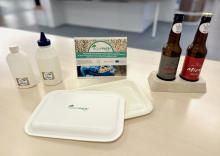
The BioSupPack project aimed to deliver novel, cost-competitive and versatile bio-based packaging solutions - based on PHA - that demonstrate high-performance for the packaging of food, cosmetics, homecare and beverage products as well as no environmental damage during and after use.
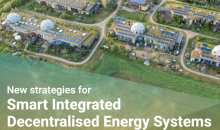
The goal of this study was to investigate the feasibility for Smart Integrated Decentralised Energy (SIDE) systems to contribute to the resilience, flexibility and circularity of the Dutch national power system infrastructure. The energy sector plays a crucial role in tackling the challenge of transitioning into a circular, renewable energy-based economy. For this reason, the Dutch government has decided to quintuple renewable power generation by 2030.
Thanks to recent developments in renewable energy technologies such as batteries, heat pumps and solar panels, but also biodigesters in which organic waste and black water are collected providing an alternative heating source, it is now possible to produce, convert and store energy locally within so-called microgrids.
Russia is among the larger suppliers of raw materials to the EU. It is the biggest world supplier for palladium, platinum and nickel, and a prominent one for aluminium and copper. The country still holds large untapped reserves of rare-earth elements.
This paper provides an overview of EU import dependency on raw materials and Russia’s share among EU sources of key supplies for low-carbon technologies. It then looks at prospects for meeting future material demands through circularity for three technologies, namely lithium-ion batteries, wind turbines and fuel cell electric vehicles.
The analysis is based on two scenarios with different levels of ambition. They aim to give an indication of the scale of potential benefits that can be achieved through circular approaches.
The Bioschamp project, coordinated by Asochamp, aimed to develop a peat-free casing soil to serve as a carrier for selected bacterial strains that will act as crop biostimulants.
This solution will also be an alternative to pesticides, thus contributing to improve the circularity, productivity, sustainability and profitability of the European mushroom sector.
This guide helps municipal authority practitioners adopt a more circular approach to public procurement. It provides an overarching framework that should be adapted to the local context and the reality of each city. Each step includes questions to consider, examples of how other municipal authorities have implemented circular procurement, and resources.
This research project lists ecodesign criteria for circular fashion and textiles.
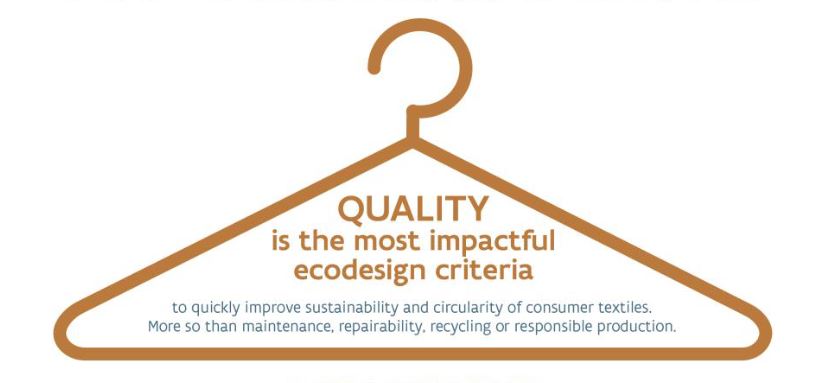
It focused on giving consumer textiles a longer lifespan with optimal reuse potential, making disassembly and recovery possible, and exploring upcycling and high-quality recycling. Extending the life of textile products turned out to have the greatest impact in the short term. Quality seems to be the most impactful ecodesign criterion when it comes to improving the sustainability and circularity of consumer textiles as quickly as possible.
The project defined seven product categories, identifying a set of minimum criteria for each. The report looks at existing labels, standards and regulations and the authors hope it will help expand the Ecodesign Directive by adding a textile category.
This report, prepared by the Dutch Ministry of Infrastructure and Water Management, provides an analysis of the Dutch procurement system.
The Dutch Sustainable Public Procurement (SPP) approach embraces six themes, two of which are explored in this study: climate-neutral procurement and circular procurement. Included in these two themes are aspects such as CO2 and other greenhouse gas emissions, as well as the reuse of raw materials at the highest possible level of value. SPP is a highly topical issue for a steadily growing number of organisations in the Netherlands: action plans are being written, requirements and criteria are being formulated, and tools are being produced. Together, these activities are creating growing demand for instruments that evidence the impact of SPP.
Many actors see the EU’s circular economy (CE) as a promising narrative which steps outside dominant end-of-pipe solutions towards an encompassing vision for strategies across the supply chain. However, this study finds that the EU CE Action Plan maintains the status quo narrative instead of suggesting radical changes.
By focusing on stakeholder narratives, this analysis shows that the inertia is primarily due to CE proponents’ self-perception of being in a legitimacy crisis and their strategic arguments that have:
concealed social conflict and potential trade-offs
strengthened the agency of ‘status quo’ agents
excluded alternative voices questioning the proposed CE narrative.
The paper discusses how to develop new environmental narratives outside the status quo.