This European Investment Bank Guidance Note supports the integration of circular economy principles into procurement practices.
It provides practical tools and examples covering everything from early planning and market engagement to tendering, contract management and performance monitoring.
This guide provides practical guidance, steps and tools for cities and regions interested in designing, implementing and continuously improving effective support measures, using a systemic and ecosystem-based approach.
Interested in finding out more about Extended Producer Responsibility in the field of packaging? See the factsheets, videos and documents included in this toolbox.
Discover how fashion and clothing businesses can use standards to support circular design, transparent claims and more resilient operations.
Explore the regulations driving change across the fashion and clothing sector, learn how different business functions contribute to a more circular business model, and find trusted guidance to help plan, implement and scale your circularity journey.
This call supports industrial symbiosis, waste prevention, recycling, reuse and recovery.
It is intended for Lombardy-based SMEs, including innovative start-ups, and the key areas are plastics, tyres, polymers, textiles, electronics and WEEE (including solar panels), batteries and accumulators, and the recovery of phosphorus and other CRMs.
This Horizon Innovation Action is looking for tools, solutions and associated business models that facilitate the adoption of inclusive circular construction models and more efficient use of buildings.
The goal is to reduce the need to extract raw materials.
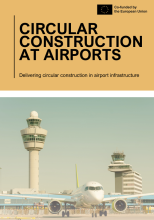
Applying circular principles in an airport environment is not straightforward.
What is needed are approaches that work within the constraints while still enabling progress. The guidance developed through the TULIPS project translates circular construction principles into practical frameworks that support decision making in real airport contexts.
A practical framework for structuring operational, traceability and material-flow evidence into buyer-readable documentation for circular value chains, procurement review and cross-border supplier due diligence.
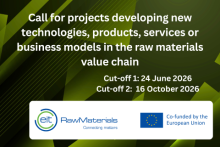
KAVA Call 14 - RIS Innovation is looking for projects developing new technologies, products, services or business models in the raw materials value chain.
The projects must focus on exploration, sustainable mining, processing, circularity, recycling or substitution.
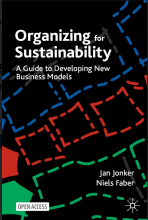
This Open Access textbook aims to educate students and professionals on how to develop business models that positively impact people, society, and the social and ecological environment.
It explores a different view on how to organise value creation, shifting from an almost exclusively monetary focus to one that creates a positive impact across multiple values.