A practical executive checklist for assessing whether supplier evidence from Brazil can be translated into buyer-readable documentation for European procurement, compliance and board-level review.
The WEconomy Transition Canvas offers a practical workbook for developing collective transition programmes.
It is designed for transition managers, process directors, regional transition accelerators and others committed to addressing the challenges of sustainability, circularity, quality of life and biodiversity.
The InvestCEC project aimed to bridge the gap between local action and EU-wide ambition, offering investment readiness support and raising a fund to enable public/private partnerships.
It produced five factsheets setting out guides and replication materials developed by the project.
This guide aims to give communication and marketing professionals, CSR managers and business leaders the keys to communicate - accurately, transparently and meaningfully - on the circular economy. It sets out clear principles on what communication should achieve and how to achieve it.
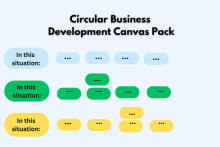
The Circular Business Development Canvas Pack is a set of tools designed to help businesses transition to circular economy models. It integrates key sustainability principles into business development, offering structured frameworks to map out circular strategies, value chains and impact.
French regulations on the circular economy in the construction sector have evolved significantly in recent years. INEC and Altes Avocats have produced an accessible guide to help stakeholders apply those regulations and share best practices.
This Standardization Roadmap aims to provide an overview of the status quo of standardization in the field of the circular economy, to describe the requirements and challenges for seven key topics, and to identify possible needs for future standards and specifications.
The Extended Producer Responsibility Alliance (EXPRA)was founded in 2013 to promote effective and efficient EPR systems and sustainable packaging. It has produced a study outlining the core principles and practices of EPR, which are crucial for shaping and supporting effective EPR policies across Europe and worldwide.
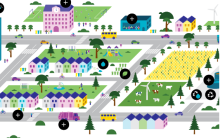
The HOOP project has provided Project Development Assistance to eight lighthouse cities and regions, supporting them with the development of large-scale urban circular bioeconomy initiatives focusing on making bio-based products from urban biowaste and wastewater. The partners have developed a suite of open-source tools to help cities and regions launch urban circular bioeconomy projects.
circulareconomy.earth is a project set up by Chatham House's Environment and Society Programme. It enables users to explore the policy and trade dynamics associated with transitioning from a linear to a circular economy model, as well as providing analyses of the associated opportunities and trade-offs.