The Circular Fashion Games: one programme, two bootcamps. Team up and join the creative ecosystems in Eindhoven and Amsterdam to reshape the fashion industry and shift it towrards the circular economy.
Van Hulley is a Dutch SME that upcycles worn-out shirts into boxershorts, employing disadvantaged women as seamstresses every year and training them to join the labour market more permanently.
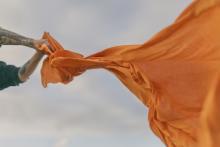
Infinited Fiber has developed a technology that can turn cotton rich textile waste into new fibres for the textile industry. Not just once, but infinitely. These new Infinna™ textile fibres can be recycled again and again without decreasing the quality of the fibre.
The Relooping Fashion Initiative (2015-2017) was aimed at piloting and modelling the circular business ecosystem for textiles. This report covers the business ecosystem modelling work and introduces the project team’s crystallized vision of a higher-level system that enables the textiles industry to operate according to the basic principles of a circular economy.
The focus of the report is on explaining the principles of a circular economy in the context of textiles, and drawing a picture of the key material flows and types of actors along the value cycles from end-user back to end-user. The overall goal is to maintain the value of materials as high as possible, with minimum environmental impact. The different circular business models for textiles are introduced along the value cycles.
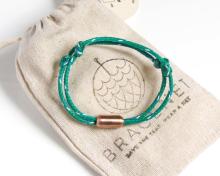
Bracenet collects discarded fishing nets, has them upcycled into fabric and then produces unique Bracenets, dog leashes, keychains, and rings in workshops that provide employment opportunities to disabled persons.
ECOALF is a Spanish fashion company with a very keen interest in circularity and sustainability. It focuses on developing innovative methods to produce fabric that does not hurt the planet.