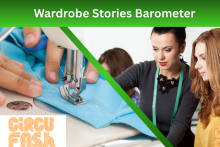
The Wardrobe Stories Barometer aims to collect stories about circular fashion and skills. Did you buy an upcycled dress or have a pair of trousers repaired? Do you know about a circular hub teaching sewing skills or a workshop looking for someone who knows what to do with a needle?
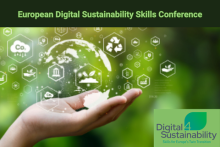
This conference will bring together policymakers, industry leaders, educators, researchers and skills experts to explore how Europe can build a workforce ready for a sustainable digital future.
It is part of the European Skills & VET Week 2026, an initiative of the European Commission organised by Cedefop.
This #EU Circular Talk will explore how Europe can accelerate a circular economy that is environmentally sustainable, socially just and centred on people’s wellbeing.
Through perspectives from policy, business, research and civil society, participants will discuss how circular economy initiatives can deliver environmental, social and economic benefits, and how different actors can ensure that no one is left behind in the transition.
3D-CIRCULAR is building degrees to train professionals to understand material flows and governance and work with the data infrastructure, AI and traceability systems.
The project will run until July 2029, and three master's degrees are already available. The first intake will start in October 2026; apply by 25 September!
High-quality learning content providers from across Europe are invited to join an EU-wide education and training ecosystem supporting Europe's green and digital industrial transformation.
The circular economy and recycling systems are among the priority areas. Selected participants will be eligible for financial support to adapt, digitise or scale content.
SYNCRETIX assists organisations with designing and implementing ESG transformation, circular economy solutions and resilience strategies.
Their approach integrates circular economy principles across the entire lifecycle of products, buildings and urban systems while strengthening climate resilience, resource efficiency and long-term sustainability.
Climate change, inconsistent policies, greenwashing concerns and the promise of AI-powered sorting systems are reshaping how the wood sector must adapt.
The Wood2Wood project is addressing a structural blind spot in circular economy transitions: the future occupations needed to make wood reuse viable at scale.
The Growing Regenerative Futures acceleration programme supports people who want to build, transform or grow projects connected to the circular economy in the food and agriculture sectors.