Aimed at defining, identifying and quantifying employment opportunities that are needed in the circular economy, Circle Economy and the Erasmus Research Institute for Happiness Economics (Ehero) have developed a standardised and replicable methodology that measures circular employment in cities around the world.
Once identified, the circular jobs were categorised according to the seven key elements of the circular economy, showing that a large majority are focused on ‘incorporating digital technology’ and ‘preserving and extending what’s already made’. In the past fifteen years, activities that involve ‘repair & maintenance‘ have remained stable in numbers, with the ‘incorporation of digital technologies’ becoming an up and coming job provider.
LIPOR's Environmental Education and Intervention Program aims to create an educational offer that encourages citizens to implement good environmental practices.
Food waste reduction
Start Date:
LIPOR’s annual prevention programme includes several projects and initiatives implemented across all eight municipalities aiming to prevent and reduce food waste.
Recycling (also including specific waste streams)
Start Date:
The Strategic Plan for Urban Waste 2020 (PERSU 2020) is the reference instrument of the urban waste policy in Portugal.
LIPOR has defined a target of 50 kg per inhabitant a year in 2020 for selective
Green public procurements
Start Date:
One public tender for catering services with fully sustainable and circular criteria.
Deadline extended for the WRI Ross prize for cities: applicaitons close 31 July 2018
Transformative projects igniting citywide change are invited to apply for a $250,000 cash prize and exposure to a world-class advisory council.
The WRI Ross Prize for Cities is a global, biennial competition supported by Stephen M. Ross to celebrate transformative projects that have ignited citywide change. Five finalists will be chosen in Fall 2018 and one winner of the $250,000 prize will be announced in April 2019.
Urban transformation is more important than ever, and often goes unnoticed beyond its immediate environs— help us spotlight the best cases from around the world to elevate these stories and inspire others.
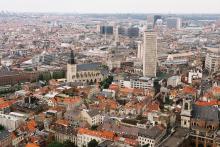
The Brussels Regional Programme for Circular Economy (BRPCE) is an integrated strategy involving 111 measures aimed at delivering circular patterns at the city level. The main objectives of the BPRCE are:
to transform environmental objectives into economic opportunities
to anchor economic activities within Brussels’ borders, maximising resource circularity and boosting entrepreneurship, and