The INSIGHT training course aims to increase knowledge, skills and competences concerning industrial symbiosis. The course, available for free on an e-learning platform, is in English, but summaries of each unit are provided in Italian, Spanish, French, Slovenian and Romanian.
Following the study on the material flow analysis for Flanders in the period 2002-2018, which was published by the Circular Economy Policy Research Center in June 2020, this study introduces the link between the material flows in and out of the Flemish economy and the material flows within the Flemish economy.
This report is part of the ongoing research at the Policy Research Centre for Circular Economy to create a monitoring instrument to guide the transition to a circular economy in Flanders. This report presents a guiding framework specifically for circular economy in the food system and provides a first set of indicators to monitor the food system.
This report presents a circular economy monitor for the societal need fulfillment system of buildings and housing in Flanders. It is part of the CE monitor of the Circular Economy Policy Research Center.
This report is part of the ongoing research conducted by the Circular Economy Policy Research Center on creating a framework for a monitor to guide the transition to a circular economy in Flanders. It presents a set of indicators for the system of consumer goods, revealing how this system performs in relation to circular economy principles.
This report provides background data for the update of four macro indicators key to monitoring the circular economy: domestic material consumption (DMC), direct material input (DMI), raw material consumption (RMC) and raw material input (RMI).
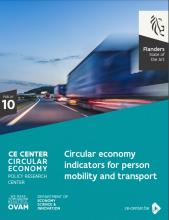
This report presents the set of indicators comprising the mobility system. The indicators show that the mobility system is far from circular and is in fact becoming more linear. It is consuming ever greater amounts of materials, with more vehicles which are used less intensively and efficiently. The modal shift towards public transport or bicycles is simply not progressing.
The Flemish Government wants to reduce the material footprint of consumption in Flanders by 30% by 2030. In order to know whether Flanders is on the right track and makes well-considered policy choices, data are needed. That is why Circular Flanders and the Circular Economy Research Centre launched the Circular Economy Monitor on 17 November.
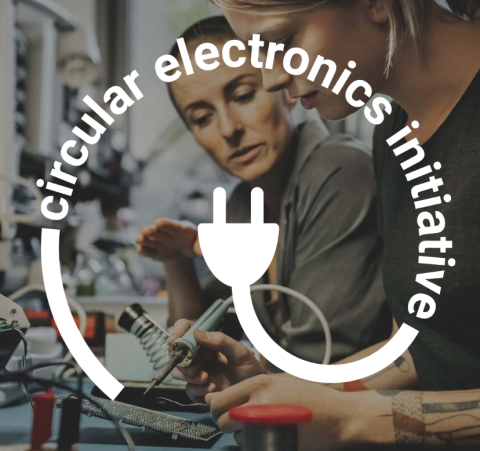
More than 20 organisations have come together in a global initiative to tackle the social and environmental problems of electronics. The Circular Electronics Initiative aims to encourage organisations and consumers to take a more responsible approach to the electronic goods they use. One core activity of the initiative is the annual event #CircularElectronicsDay.