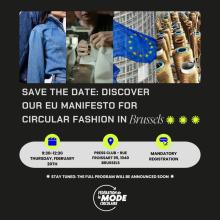
The Fédération de la Mode Circulaire (Circular Fashion Federation) is organising an event which will mark a milestone in their journey towards sustainable fashion: the release of their EU Manifesto for Circular Fashion. This manifesto outlines a policy roadmap for the European Union to leverage circular fashion as a means to bolster its textile industry, promote fair competition and champion environmental and human rights standards.
The ERASMUS+ CIRCVET project on Circular economy practical training materials for plastics manufacturing industries is organising a workshop on Closing the Loop: Circular Packaging and Company Study Cases.
The workshop will present the project and the e-learning platform and share interesting corporate case studies.
The European Bioeconomy Clusters’ Alliance is a new strategic initiative uniting 12 national and regional bioeconomy clusters across Europe. Its mission is to amplify the voice of the bioeconomy sector, drive policy advocacy for a circular and sustainable economy, and enhance cross-sector collaboration.
The launch event will bring together key representatives from the European Commission, industry leaders and bioeconomy sector stakeholders.
Refashion's Recycle Summit brings together key stakeholders from the textile and footwear sector. It showcases significant achievements in circularity, including groundbreaking technical studies, the development of unique material libraries and measurable environmental impacts. It aims to drive collaboration and innovation, strengthening the adoption of recycled materials and positioning the industry for a sustainable and competitive future.
The European Sustainable Phosphorus Platform (ESPP) is an international platform bringing together industry, science, regulators and stakeholders with a view to facilitating sustainable phosphorus management, including reuse and recycling. It will be holding a two-day workshopto discuss the EU Circular Economy Act and the CAP and develop proposals by way of input for the European Commission.
The first day will focus on proposals for nutrients in the EU Circular Economy Act and the second day on nutrient stewardship for the EU Common Agricultural Policy.
This event aims to familiarise people with the Guidance on increasing NDC (Nationally Determined Contributions) ambitions through circular action and the related Activity Sheets, drawn up by the German International Cooperation Society's global Go Circular programme. It will highlight their role in enhancing climate ambitions through circular economy measures.
Recycling Flexible Packaging will focus on finding circular solutions to the problem of flexible plastic waste.
It is intendedfor professionals involved in the design, production, regulation or recycling of flexible packaging, and will be a chance to gain insights into the latest breakthroughs and stay ahead of present or future legislative changes.
With demand for lithium-ion batteries increasing worldwide, developing a solid understanding of the environmental and social impacts associated with how they are used is becoming increasingly important.
This eventaims to discuss where we stand in terms of assessing the environmental and social impacts associated with lithium-ion batteries.
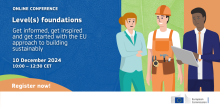
The European Commission's DG Environment is organising an online conference exploring Level(s), the EU common language for assessing and measuring the sustainability performance of buildings. It's intended for anyone working in the built environment sector.
The Level(s) foundations conference will enable participants to get informed, get inspired and get started with the EU approach to building sustainably.
The European Commission's Joint Research Centre is organising a second consultation meeting with stakeholders as part of its ongoing work on a preparatory study on textile products. This will support the implementation of the recently adopted Ecodesign for Sustainable Products Regulation.