This Belgian company operates a product-as-a-service business which facilitates the renting of an item which people may own but are unlikely to be using for many days each year.
It enables owners to earn income from an underused asset and travellers to gain an alternative to buying equipment for occasional use. It also proves that the product-as-a-service model can be applied to a wide range of items.
Lifetwin is a software-as-a-service platform which helps businesses meet DPP requirements. Its DPPs also enable after-sales service, as consumers can access digital warranties, submit maintenance and repair requests, order original spare parts, or review user manuals.
Loopami is a Milan-based platform which creates local communities of people interested in sharing and reusing items. It's still in the testing phase, but the initiative reduces consumption and waste while also forging closer ties between neighbours.
FIXNOW is a smartphone repair company based in Belgium. Where technically feasible, they can replace the glass on the display rather than the entire display module.
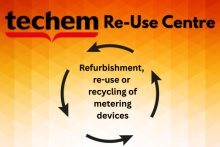
Energy services provider Techem has set up a Re-Use Centre promoting a circular, resource-efficient approach to equipment management in the building sector.
Decommissioned metering devices are brought to a centralised facility, evaluated and directed towards refurbishment by manufacturers, reuse of functional devices or components, or recycling of non-reusable materials.
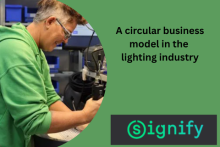
Signify Circle makes lighting products which are resource‑efficient and circular. It factors ecodesign, product-as-a-service, remanufacturing and repair into its business model.
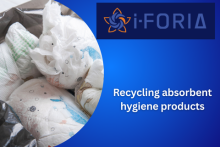
i-Foria Italia has validated a technology for recycling nappies, incontinence aids and sanitary pads - products which have always been considered unrecyclable owing to the wide mix of materials in them. i-Foria's technology separates the components and returns them to the production loop.
The RevHydro project aims to accelerate the integration of circular economy principles into hydropower plant operations and design an innovative fish barrier and guidance system.
The CEI BOOST project is linking up digitalisation and the circular economy in order to enable circular business models and accelerate the transition towards a sustainable circular economy. It focuses on specific policy instruments in nine countries and aims to improve them.