The Access Economy Alliance promotes the sharing economy: the concept that you don't need to buy something if you're only going to use it a few times.
It aims to develop the network of sharing stations, self-service lockers where you can go to borrow everyday items, from DIY tools to sports equipment. It is also a forum where access economy practitioners can engage in strategic discussions, meet other organisations in the field, learn from experts and contribute to access economy innovations.
Public authorities, businesses and researchers come together to accelerate Europe’s transition to a circular economy through access-based services.
The Alliance is supported by the EU through the Digital Kiosks project which is piloting 22 new sharing stations across Europe.
The Circular Economy Show Podcast looks at the various aspects of the circular economy and the people driving it. There are over 200 episodes so far, covering a huge range of issues.
The textile and apparel value chain is one of the most resource-intensive sectors, generating significant waste and relying heavily on a vulnerable workforce.
In recent years, businesses in this sector have adopted circular economy strategies to address sustainability challenges. However, most of these efforts focus on material efficiency and waste reduction, often neglecting social dimensions.
This PhD dissertation addresses this gap by exploring how to integrate social justice and equity into circular transitions at the business level. Through case studies in the Netherlands, Spain and India, it investigates how businesses can adopt circular practices inclusively and how policymakers can enable a more just circular transition.
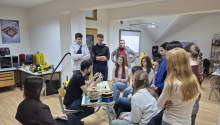
The Makerspace Garage Association in Mostar has been active for a few years now. Having built up an impressive array of skills and modern technologies, the association decided to make what they do available to everyone in the city of Mostar. Result: thefirst Repair Café in Bosnia and Herzegovina and the wider Western Balkan region!
LOOP Forum is the leading Nordic meeting place for companies working with the circular economy and resource efficiency.
It will bring together decision-makers from across industries to explore how circular solutions can strengthen competitiveness, secure access to critical resources, and build more resilient European value chains.
The EU-funded project NiCE – from niche to centre focuses on promoting circular lifestyles and sustainable consumption structures in city centres. Its final conference will transfer the knowledge built up during the project and promote networking among stakeholders, including during the Market of Opportunities where participants can present their city, organisation, activities or project.
SustainableSolutionsMatch empowers European businesses on their path to a sustainable and circular economy. It brings solution seekers and providers together to tackle real challenges and find practical answers.
Every year, our global economy consumes around 100 billion tonnes of resources — three quarters of which it cannot replenish. This reliance on a constant flow of virgin raw materials leaves our economies increasingly exposed to price shocks, supply disruptions and the universal inefficiencies of resource waste. One direct way to relieve this pressure is to keep materials circulating at their highest value.
Part of a policy series on accelerating the circular economy transition, this brief sets out a targeted approach to keeping materials in use. A focused mix of policies can promote design, business models, and incentives that favour reuse, repair and remanufacturing alongside regenerative practices such as cascading, composting and returning nutrients to soil.
Reuse activities are an essential part of the EU’s moves to tackle the growing waste crisis.
However, the current combined targets for reuse and recycling generally prioritise recycling. This disregards the fact that quantitative reuse and preparing-for-reuse targets are an essential policy tool to implement the EU’s waste hierarchy.
This report presents an overview of existing targets and a detailed look at 24 targets set in different product categories and waste streams. The policy recommendations will help policymakers as they shape the Circular Economy Act, the revised WEEE Directive and other relevant measures at EU level. They cover issues such as setting specific targets for product streams with high environmental impact and job creation potential.