As part of its work on the environmental footprint, the European Commission organised a webinar for SMEs on 10 December 2020 providing an introduction to the Product Environmental Footprint (PEF) method.
ZWE is the European network of communities, local leaders, experts and change agents working towards a better use of resources and the elimination of waste in our society. It advocates for sustainable systems; for the redesign of our relationship with resources; and for a global shift towards environmental justice, accelerating a just transition towards zero waste for the benefit of people and the planet.
The network now includes 35 members from 28 European countries and works with topics across the whole chain, from product design to reusability to end-of-pipe waste management solutions, and from the phase-out of plastics to waste trade and municipal zero waste strategies.
Part of its work is done in Brussels, influencing European legislation from product design to waste disposal.
IUCN is a union of government and civil society organisations working to advance sustainable development and create a just world that values and conserves nature.
Created in 1948, it is now the world’s largest and most diverse environmental network, harnessing the knowledge, resources and reach of over 1 400 member organisations and 17000 experts. This makes it the global authority on the status of the natural world and the measures needed to safeguard it.
The European Regional Office represents IUCN at EU level and works with Member States to help deliver EU goals.
IUCN brings expertise and convening power on biodiversity and nature-based solutions to the table, aiming to bridge the environmental priorities of nature conservation and the transition from a linear to a circular model.
The Commission's DG Environmentand DG for International Cooperation and Development commissioned a study on the circular economy in Africa, and eight country reports were drawn up in preparation for a continent-wide report on the prospects of the circular economy in Africa.
The Rwanda report examines the scope and status of the circular economy there. It looks at the policy framework, trade and investments and the impact and benefits of the circular economy. It also explores circular economy-related cooperation between the EU and Rwanda. It concludes that the government is acting on circular economy principles and is well placed to be the regional hub for Africa in the area of the circular economy.
The Commission's DG Environment and DG for International Cooperation and Development commissioned a study on the circular economy in Africa, and eight country reports were drawn up in preparation for a continent-wide report on the prospects of the circular economy in Africa.
The South Africa report examines the scope and status of the circular economy there. It looks at the policy framework, trade and investments and the impact and benefits of the circular economy. It also explores circular economy-related cooperation between the EU and South Africa. It concludes that South Africa already promotes a green economy agenda in Africa and the national government is now planning to pivot to a circular economy in the wake of the pandemic.
The Commission's DG Environment and DG for International Cooperation and Development commissioned a study on the circular economy in Africa, and eight country reports were drawn up in preparation for a continent-wide report on the prospects of the circular economy in Africa.
The Senegal report examines the scope and status of the circular economy there. It looks at the policy framework, trade and investments and the impact and benefits of the circular economy. It also explores circular economy-related cooperation between the EU and Senegal. It concludes that Senegal is promoting the green economy as a way to meet basic social needs and support sustainable development, and has adopted a national circular economy policy.
The Commission's DG Environment and DG for International Cooperation and Development commissioned a study on the circular economy in Africa, and eight country reports were drawn up in preparation for a continent-wide report on the prospects of the circular economy in Africa.
The Nigeria report examines the scope and status of the circular economy there. It looks at the policy framework, trade and investments and the impact and benefits of the circular economy. It also explores circular economy-related cooperation between the EU and Egypt. It concludes that there has been no real circular economy shift away from Nigeria's dependence on oil.
The Commission'sDG Environment and DG for International Cooperation and Development commissioned a study on the circular economy in Africa, and eight country reports were drawn up in preparation for a continent-wide report on the prospects of the circular economy in Africa.
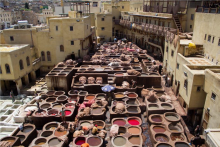
The Morocco report examines the scope and status of the circular economy there. It looks at the policy framework, trade and investments and the impact and benefits of the circular economy. It also explores circular economy-related cooperation between the EU and Morocco. It concludes that while Morocco is committed to implementing policies in favour of the circular economy, the concept is fairly new.
The Commission's DG Environment and DG for International Cooperation and Developmentcommissioned a study on the circular economy in Africa, and eight country reports were drawn up in preparation for a continent-wide report on the prospects of the circular economy in Africa.
The Kenya report examines the scope and status of the circular economy. It looks at the policy framework, trade and investments and the impact and benefits of the circular economy. It also explores circular economy-related cooperation between the EU and Kenya. It concludes that Kenya can be seen as one of Africa's frontrunners in furthering a transition to circular economy but still has steps to make to mainstream it further in its broader economic policy framework.
The Commission's DG Environment and the DG for International Cooperation and Development commissioned a study on the circular economy in Africa, and eight country reports were drawn up in preparation for a continent-wide report on the prospects of the circular economy in Africa.
The Ghana report examines the scope and status of the circular economy there. It looks at the policy framework, trade and investments and the impact and benefits of the circular economy. It also explores circular economy-related cooperation between the EU and Ghana. It concludes that while Ghana has become one of sub-Saharan Africa’s most politically stable economies, various issues prevent it from moving to a circular model.