Catalonia's Ministry of Territory and Sustainability is organising the 2021 Catalonia Eco-Design Award. This recognises products already in the market or under development or strategies designed to improve the environmental performance of products and services and so contribute to the circular economy. Deadline for applications: 15 February.
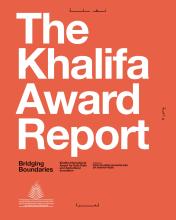
Date palms are becoming ever more important globally and in the MENA region (Middle East and North Africa). The Khalifa Award Report, inspired by 46 contributors in 21 countries, focuses on the 5 Ps -People, Planet, Prosperity, Peace and Partnerships - which shape the United Nations 2030 Agenda for Sustainable Development.
The bio-circular economic potential of the date palm industry has yet to be explored. In some cases, it is a necessity that can save lives in oases prone to fire hazards caused by climate change; it can also provide new green jobs in the sustainable economy transition. The European circular economy transition can serve as a model for adaptation in the MENA region.
More info on date palm recycling on pages 162-3 of the report.
Circular Change focuses on establishing and fostering dialogue between stakeholders, particularly as regards creating circular economy roadmaps. It promotes new narratives, exchanges knowledge and enables innovation.
The Collaborating Centre on Sustainable Consumption and Production (CSCP) is an international, non-profit think-and-do tank that works with businesses, policy makers, partner organisations and civil society to deliver a good life for all. They are experts in sustainable solutions and aim to mainstream sustainability.
CSCP is active in fields such as social innovation, sustainable product portfolio and footprint assessments. It provides policy advisory services rooted in scientific research and hands-on experience, and develops focused research and evaluation through real-time prototype testing in a holistic living lab format. It also conducts training and capacity building.
Baterkáreň's mission is to make sustainability (circular economy principles and associated environmental protection) accessible to the general public, in order to render communities capable to adapt as effectively as possible to the potential impacts of climate change in the area.
The Fabric Sales is a designer deadstock fabric store – somewhere individuals and businesses can buy designer fabric which would otherwise be treated as waste.
The transition from a linear to a circular economy is one of the most important imperatives of our time: it requires a fundamental change in the way we produce and consume. A circular approach to production and consumption reduces emissions and pollution, increases competitiveness, and boosts innovation.
From goods as simple as office supplies to services as complex as energy systems – everything has to go through procurement. Green Public Procurement is not only closely tied to key EU Green Deal targets, but also to the indispensable principle of a just and inclusive transition to the Circular Economy.