ResQ Club is a Finnish company and mobile application, which also covers parts of Sweden, Poland and Germany. Its goal is to combat food waste by connecting sustainable restaurants, cafés and food shops with consumers who appreciate affordable quality food.
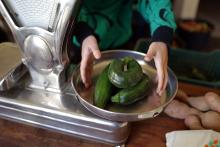
The cooperative Fruta Feia (“ugly fruit”, in Portuguese) has been preventing the waste of so-called “ugly” fruit in Portugal, that are not usually sold in markets.
Better World Fashion produces new quality products from waste materials. Their primary material, leather, is from discarded post-consumer products collected by NGOs.
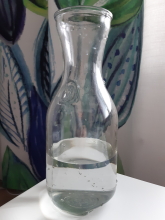
Mutualia, a social services and medical care provider in the Basque Country, Spain, has installed water fountains connected to the public water network to use tap water instead of buying bottled water.
The city of Ludwigsburg in Germany has a sustainable development strategy that includes the use of procurement to achieve its sustainability goals, instructing all public procurement departments to follow “Cradle to Cradle”principles in their procurement and awarding criteria.
Sitra works with partners from different sectors to research, trial and implement bold new ideas that shape the future. It aims to make Finland a pioneer in sustainable well-being.
It is a future-oriented fund which creates preconditions for reform, spurring everyone towards making a change and providing opportunities for co-operation.
Sitra’s work focuses on supporting a fair transition to a circular economy and investigating how business can be based on sharing instead of ownership. Sitra is also working to advance circular trade policies, to increase the understanding of environmental effects of digitisation and to explore the potential of the circular economy to safeguard biodiversity.
This COSME project aimed to implement a capacity building and support scheme for SMEs in the tourism sector that will lead them to reach different levels of circular economy innovations within a transition system.
The circular economy has become a priority policy topic in Europe (EC, 2015, 2020) and is a key objective of the European Green Deal. There is increasing interest in the potential for altering traditional business models to enable materials and products to be reused and remain in the economy for as long as possible — as opposed to being used once and then discarded.
This briefing presents an analytical framework, identifying actions that can be taken to implement circular business models effectively.