Circular economy interventions in four key sectors can halt global biodiversity loss and help the world's biodiversity recover, finds this study.
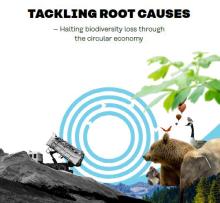
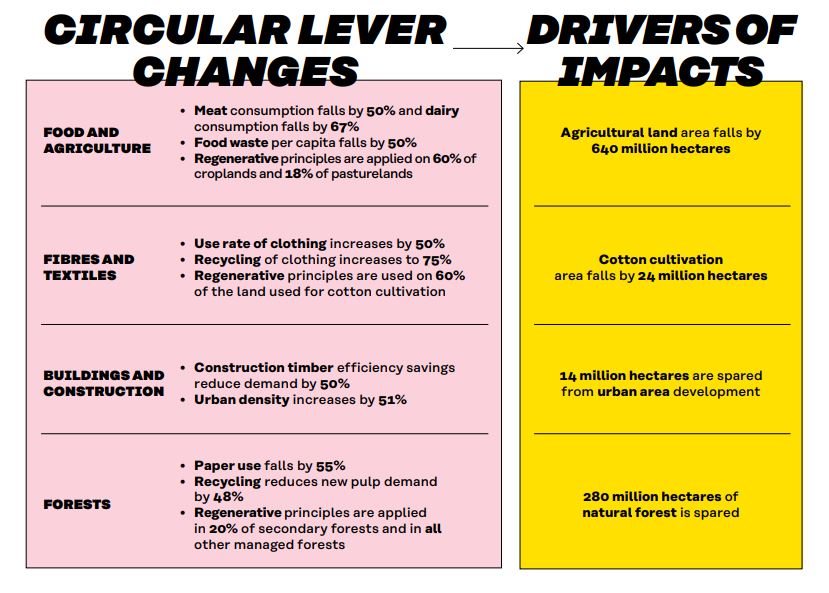
Tackling root causes - Halting biodiversity loss through the circular economy, written by experts from Sitra and Vivid Economics, is the first to quantify the role a circular economy can play in tackling global biodiversity loss, targeting the four sectors with the largest impacts:
food and agriculture
construction
textiles
forest and forestry
Circular interventions in these sectors can halt biodiversity loss even if no other action is taken. And more than that, the study finds that the world’s biodiversity can recover to 2000 levels by 2035, if the circular interventions are implemented.
Urgent global action is required to address unsustainable material resource use. This report explores the possibility of, and analyses the implications associated with, developing an international agreement on the management of natural resources.
Why an international agreement?
An international agreement could support
incentivizing action on a global level
generate awareness to tackle the issue of resource management
solve the issue of uncoordinated actions at various regional and governance levels.
The report also looks at the extent to which Free Trade Agreements (FTAs), many of them including provisions relevant to developing circular solutions, cover natural resource management and could be leveraged to enhance resource efficiency.
The European Commission would like to hear your views on the initiative "Circular economy – revision of the monitoring framework". This call for evidence will be open for feedback until 3 June 2022. Your input will be taken into account when developing and finetuning the initiative.
This year, the LIFE programme turns 30. There are more than 5 500 LIFE projects – both past and present – across Europe. All LIFE 2022 calls for proposals are expected to be published on the Funding & tender opportunities portal on 17 May 2022.
ROCESP members include local and central government institutions, academic, research and innovation institutions, businesses and civil society representatives.
The platform acts as a network of networks, bringing together initiatives, experiences, problems and expectations in the field of the circular economy.
The platform:
disseminates knowledge
promotes dialogue and synergies between Romanian stakeholders
maps good practices in Romania
helps establish links between national projects
shows how Romania has adapted its economy to become more circular.
One major issue at the moment is making the EU less reliant on Russia.
This paper from the CEPS Think thank provides insights on Russia’s share among EU sources of key supplies for low-carbon technologies. It looks at prospects for meeting future material demands through circularity for three technologies: lithium-ion batteries, wind turbines and fuel cell electric vehicles.
Ireland is at a turning point for the transition to a circular economy (CE). The 2022 Whole of Government Circular Economy Strategy provides the policy framework for the CE in this country, and the forthcoming Circular Economy Bill is expected to strengthen waste and CE legislation.
Nevertheless, with a circularity material use rate of 2% in 2020, Ireland shows significant scope for progress. This report analyses the state of play and challenges of the circular transition in Ireland and provides policy recommendations for CE policy across levels of government. It is the result of a two-year policy dialogue between the OECD, the Department of the Environment, Climate and Communications, as well as a broad range of public, private and civil society stakeholders.