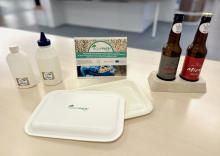
The BioSupPack project aimed to deliver novel, cost-competitive and versatile bio-based packaging solutions - based on PHA - that demonstrate high-performance for the packaging of food, cosmetics, homecare and beverage products as well as no environmental damage during and after use.
The Bioschamp project, coordinated by Asochamp, aimed to develop a peat-free casing soil to serve as a carrier for selected bacterial strains that will act as crop biostimulants.
This solution will also be an alternative to pesticides, thus contributing to improve the circularity, productivity, sustainability and profitability of the European mushroom sector.
In the context of a three-year project on “Innovative Business Practices and Economic Models in the Textile Value Chain” (InTEX), UNEP is seeking an Implementing Partner to support its impact assessment work on sustainable economic pathways for sustainable and circular textiles. The deadline for submitting proposals is 16 May 2022.
This research project lists ecodesign criteria for circular fashion and textiles.
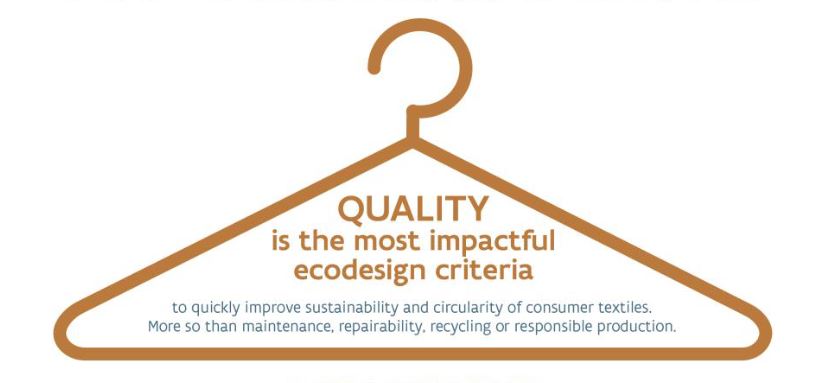
It focused on giving consumer textiles a longer lifespan with optimal reuse potential, making disassembly and recovery possible, and exploring upcycling and high-quality recycling. Extending the life of textile products turned out to have the greatest impact in the short term. Quality seems to be the most impactful ecodesign criterion when it comes to improving the sustainability and circularity of consumer textiles as quickly as possible.
The project defined seven product categories, identifying a set of minimum criteria for each. The report looks at existing labels, standards and regulations and the authors hope it will help expand the Ecodesign Directive by adding a textile category.
Urban agriculture comes with its own share of environmental impacts. Circular strategies promise to reduce these impacts, but not all strategies are resource efficient and environmentally effective.
This paper finds that the most eco-friendly and circular strategies for urban agriculture, taking a Mediterranean tomato crop as a case study, include:
Struvite (phosphate mineral recovered from wastewater treatment) instead of non-renewable phosphate fertiliser to conserve freshwater
Recycled steel and materials for urban agricultural infrastructure to reduce carbon emissions, toxicity and freshwater pollution
Closed-loop irrigation to minimise ocean and freshwater pollution. However, if new infrastructure is required, it could lead to an increase in carbon emissions.
The slow flower movement is growing in Europe and aims to provide local, seasonal and organic flowers. Why? Because the international flower industry is very harmful to nature and has major negative impacts in developing countries.
The Circulab Academy is an independent design studio and strategy consulting agency that helps organizations worldwide imagine and design regenerative solutions. It provides online courses based on powerful and open source circular design tools, created and enhanced by Circulab since 2014.
Now the Circulab Academy has a new free online course "Activate the Circular Economy".
This literature review identified and categorised circular economy (CE) practices within all stages of the food and feed production chain in Europe to provide an overview of current and envisaged practices. There are four macro areas:
reducing food and feed waste in wholesale, food retail, catering and households and
reducing food and feed packaging waste.
It is recommended that future primary research in novel food and feed in the CE focuses on areas other than insect farming, and that there are further investigations into the potential risks associated with importation into the EU of livestock/goods that may have been subject to different restrictions/legislation.