On Thursday 23 June 2022, from 13:30 to 15:30 CEST, the United Nations Environment Program will be hosting a webinar to celebrate the 20th anniversary of the Life Cycle Initiative. The event will take stock of how Life Cycles Approaches have accelerated the transition to sustainable consumption and production.
The European Commission has launched new resources to help buildings professionals to start using Level(s), the EU common language framework for monitoring and assessing the sustainability performance of buildings. Level(s) is a simple entry point for applying circular economy principles in our built environment.
By building on the insights from previous EEA reports on drivers of sustainability transitions, this briefing explores alternative ideas about growth and progress with the aim of broadening the sustainability debate.
Economic growth is closely linked to increases in production, consumption and resource use and has detrimental effects on the natural environment and human health. It is unlikely that a long-lasting, absolute decoupling of economic growth from environmental pressures can be achieved at the global scale. Societies need to rethink what is meant by growth and progress and their meaning for global sustainability.
The briefing outlines how circular economy may not deliver the transformation to sustainability when growth strategy still leads to increased material consumption.
The Roadmap - Towards the Circular Economy in Montenegro aims to steer the transition to a circular economy in Montenegro. It is based on systemic thinking and outlines the main drivers, horizontal and priority areas, opportunities for circular transformation and recommendations for the way forward.
The strategy identifies five focus areas (food and forest systems, the built environment, tourism and manufacturing) that are highly interconnected and, through the principles of industrial symbiosis and synergies, can result in systemic change.
The roadmap is an outcome of collaboration between the Montenegrin Chamber of the Economy, UNDP, Circular Change and Deloitte BiH.
Small Scale Actions (SSA) are a new element introduced for this round of URBACT action planning networks (2019-2022). This compendium summarises all of the SSAs carried out within the Resourceful Cities Network. It aims to support and inspire other cities which want to accelerate their circular transition.
A wide range of SSAs were carried out by Resourceful Cities partners, each one responding to an identified need within the individual city context. Actions included promoting citizen engagement and participation, enhancing knowledge and raising awareness of the circular economy, business support, data collection and monitoring and trialling new business models.
The Balearic Islands have adopted a new law on urgent measures to promote the sustainability and circularity of tourism, introducing a strategy for circularity.
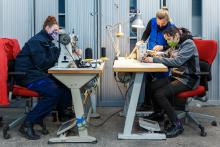
remesh is a socio-professional business workshop with an environmental impact. Most of its employees are women from disadvantaged background. The workshop is also providing a circular economy business model as they reuse advertising banners and meshes to make new products that are fashionable but sustainable.
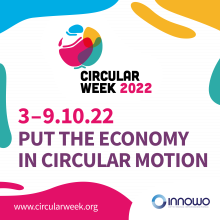
The Circular Week is a series of events and initiatives dedicated to circular economy and sustainable development, taking place across Europe. It aims to promote the idea of circular economy, support sustainable business models and establish cooperation between stakeholders.
The 2022 edition will take place from 3 to 9 October. Submit your event and help close the circle!