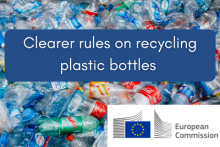
The European Commission has just adopted new rules on recycling of single-use plastic beverage bottles made primarily of polyethylene terephthalate (PET bottles).
The rules will ensure transparency in calculating recycled content in these bottles and enable Member States to meet recycled content targets.
This session will enable participants to engage in a discussion on curbing ultra-fast fashion, regulating textile waste and advancing circular solutions for the textile sector.
It is part of Generation Climate Europe’s ongoing Youth Report on Textile Waste and aims to ensure that youth perspectives inform EU-level policy discussions and recommendations.
Last week, the European Economic and Social Committee, one of the two EU bodies behind the ECESP, adopted an opinion on the future Circular Economy Act.
The ECESP contributed through targeted expertise and wider stakeholder engagement.
The circular economy will not be built on materials alone — it needs people, and the right skills, in the right places. Europe's green transition is creating jobs. But it is also creating gaps — in skills, in access and in who benefits.
Four speakers from research, industry, academia and policy will tackle the questions that matter — from what is actually working on the ground to whether Europe can get there by 2030, and get there fairly.
The Batteries Regulation will introduce new transparency and data requirements from raw materials to end of life.
This webinar will provide the latest updates, key obligations and industry perspectives with an eye to 18 February 2027 when the Regulation will come into effect.
Rice Tab is a technical board developed from rice husks, an agricultural byproduct widely available in Europe.
Designed for applications in architecture, interior design and furniture, it transforms what was once considered waste into a high-performance material with a new functional life in the built environment.
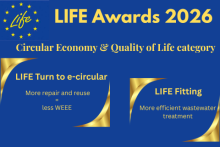
The LIFE Awards 2026 included the Circular Economy & Quality of Life category.
The winner proposed a replicable way to reduce the amount of WEEE generated, and one of the runners up designed tools to optimise wastewater treatment while reducing waster consumption.
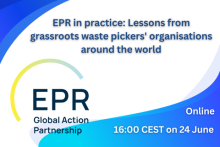
How does Extended Producer Responsibility (EPR) work in practice and what does it mean for grassroots recyclers and second-hand operators?
This session will bring together representatives of waste pickers' organisations and second-hand operators from South Africa, Chile and Europe to share their experiences with EPR policies.
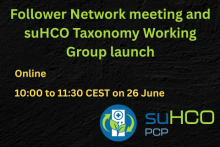
suHCO addresses the common challenge of accelerating the sustainability transition in the healthcare sector through a Horizon Europe Pre-Commercial Procurement process.
This workshop will introduce the suHCO project and its procurement approach, and outline the planned role and benefits of the Follower Network.