A new report by Zero Waste Europe demonstrates how Material Recovery and Biological Treatment (MRBT) systems are a cost-effective approach to treating (leftover) mixed waste.
The study Nothing left behind: modelling Material Recovery and Biological Treatment’s contribution to resource recovery and fighting climate change focuses on the technology that combines the use of advanced sorting systems applied to mixed waste (to extract additional material for recycling) with biological treatment of the remaining residual waste aimed at stabilising the waste before its being landfilled.
This report from the HOOP Project describes the methodological approach for identifying circular business models for bio-waste.
It presents an analysis of the business models behind 15 successful solutions for bio-waste valorisation and proposes a template business canvas for bio-waste valorisation. The report also presents a new integrated circular business model typology focused on bio-waste, along with drivers and barriers related to the implementation of circular business models in bio-waste valorisation.
Each of the eight HOOP Lighthouse Cities and Regions has set up its own local or regional Biowaste Club and carried out its first stakeholder engagement activities through Biowaste Club meetings. While some of these draw on existing local initiatives, others bring stakeholders together for the first time. In some Lighthouses, Biowaste Clubs are accompanied by citizen science activities.
This report documents the stakeholder engagement activities that have taken place so far and what can be expected next.
The Confederation of Norwegian Enterprises (NHO), the Federation of Norwegian Industries, FoodDrinkNorway, the Norwegian Federation of Service Industries and Retail Trade and the Norwegian Seafood Federation have recently published a report on Extended Producer Responsibility (EPR) as an environmental policy tool.
The report emphasises the main considerations and assessments that should underpin EPR schemes and contributes to the debate on extended producer responsibility as an environmental policy tool in Norway, the EU and the OECD.
This report looks at whether, and to what extent, the EU recycling targets can be met through improved recyclability of packaging and increased separate collections of municipal waste.
It examines the role mixed waste sorting (MWS) could play in three EU countries with high recycling performance – Germany, Belgium, and Sweden.
The conclusion is that in addition to separate collection and improved recyclability of plastic packaging, a full roll-out of effective MWS is necessary to meet recycling targets consistently, and to ensure progress towards the EU’s wider carbon emissions reduction goals.
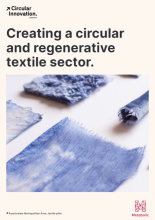
Textiles are on average the fourth-highest source of pressure on the environment and climate change from a European consumption perspective, as shown in previous EEA briefings.
Europe faces major challenges managing used textiles, including textiles waste. As reuse and recycling capacities in Europe are limited, a large share of used textiles collected in the EU is traded and exported to Africa and Asia, and their fate is highly uncertain.
The common public perception of used clothing donations as generous gifts to people in need does not fully match reality.
In the course of two decades, there has been a threefold increase in EU used textiles exports
The catalogue, entitled "20 years of ecodesign - Made in Euskadi" and available in both physical and digital formats, is the first in Europe to compile a broad list of product categories from ten industrial sectors, namely the chemical industry, the metal sector, furniture, automotive, food, production and consumption, machinery, transport, electric-electronic, and the construction materials sector. Individual data sheets containing the main characteristics and aspects of each circular product are provided.
The publication illustrates how lifecycle analysis methodologies have been applied to substantially improve the environmental impact of these products and to serve as an example for the European industrial sector.
Although only 24% of the new circular solutions developed or demonstrated in the projects are already operational, the results of all the projects completed as of this date and validated by the companies have been included.
See also the website listing all the Basque Country's circular solutions to date.
The 2022 Circular Cities Declaration Report is a very important milestone. Not only is it the first progress report for the European Circular Cities Declaration, it also features statements from 40 signatory cities. This makes it the broadest ever assessment of circular economy practices across European cities.
The report shows that considerable progress is being made: half of the 40 cities involved in the programme already have circular economy strategies in place or in development.
This is just the start. By the end of 2025, the aim is to have 150 cities signed up to this Declaration. Together, the signatories are embedding circularity into European cities!
Secondary raw material (SRM) markets are crucial for a circular economy. This is because SRMs enable recyclables to re-enter the production value chain, which reduces dependency on primary resources as a result.
This role is acknowledged in the EU circular economy action plan of 2020. However, if policy is to help establish or further develop such markets, we need to better understand the currently-fragmented SRM markets in the EU.