This briefing looks into how circular economy and waste sector policies and measures can reduce greenhouse gas emissions.
It analyses how European countries include circular economy and waste actions in their reporting on climate change mitigation policies and measures and how the introduction of additional measures can help accelerate future reductions of GHG emissions.
The briefing finds that waste management and the circular economy have considerable potential for mitigating climate change. Therefore, countries would benefit from including policies and measures in these areas in their climate policy mix.
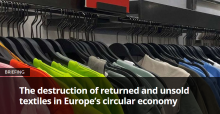
EU policymakers recently decided to introduce a direct ban on the destruction of textiles and footwear, with some exemptions for small, micro and medium-sized companies.
In this briefing, the EEA takes stock of what is currently known about the volumes and destruction of returned and unsold textiles in Europe. The growth of online shopping, flexible return practices, changed consumer preferences and fast-fashion business strategies in Europe have resulted in increased shares of returned and unsold textiles.
Over the past years, fast fashion and luxury brands have been reported as destroying returned or unsold clothing, shoes and other textiles. Textile product destruction is a very good example of a ‘take-make-waste’ approach.
Enterprise Europe Network Flanders, Flanders, Wallonie Entreprendre and Hub.Brussels are organising an official WCEF2024 side-event: a global online matchmaking session focusing on circular innovation. There'll be an online part (8-14 April) and an in-person part (17 April).
The European Green Deal is a cornerstone of efforts to achieve climate neutrality by 2050 and deliver the Sustainable Development Goals in the EU. Many policy targets are dependent on action by local and regional authorities.
The current Commission's mandate is coming to an end, and so this is a good time to kick-start discussion on the "future" Green Deal and the role of local and regional authorities in implementing it.
The European Commission’s Joint Research Centre is therefore launching a stakeholder consultation for urban policy experts and policy makers, in order to get a better understanding of policy and target priorities for EU cities.
Changes in consumption behaviours and dominant lifestyles are increasingly recognised among the critical levers for the transition to a circular economy. At the same time, public engagement still needs improvement in some areas, and people's role in the process is largely overlooked.
Join us on 8 May (10:30-12:00 CEST)for an #EUCircularTalks event. Panellists will discuss key evidence about what works best to achieve circular engagement and advance the circular behaviours that make a difference in Europe. The event will be the final rendez-vous of the series of podcasts.
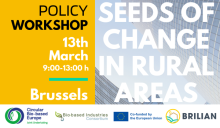
The BRILIAN project workshop "Seeds of Change in Rural Areas" will address several crucial policy-related topics, including developing new materials from agricultural feedstocks.
There will be presentations by representatives of the European Bioeconomy Bureau, the Circular Bio-based Europe Joint Undertaking and the European Commission's Joint Research Centre (EC-JRC), as well as a round table session on unlocking resources from agricultural produce and waste.