This in-person event in Brussels on the morning of 17 May will explore some of Europe’s best practices on waste prevention, implemented by coastal municipalities and regions.
It will bring together local actors behind these best practices and representatives from Brussels, in order to better understand how local actions can inform key forthcoming legislative decisions on plastic production, use and waste.
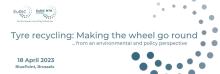
Tyres are complex products essential to the mobility of millions of Europeans. Likewise, tyre recycling is essential to the sustainability of the entire tyre value chain, be it in terms of resource efficiency or climate neutrality. Yet, despite a landmark landfill ban in 2006, much needs to be done to improve the circularity of tyres. To give an order of magnitude, today, for one tyre that is recycled, one tyre gets incinerated for energy recovery, and the worse in terms of end-markets opportunities is yet to come.
The EuRIC conference on tyre recycling takes place in Brussels on 18 April 2023.
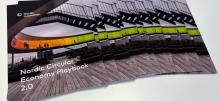
This updated playbook by Nordic Innovation, Accenture and Sitra is a guide to circular business models. It is tailored to companies in the Nordic manufacturing industries and describes the key enablers to fully transform and become a circular business.
Since 2013, the EU Ship Recycling Regulation has provided a regulatory framework for the recycling of EU-flagged ships. It acts as a benchmark for ship recycling legislation around the world.
The European Commission has launched an online public consultation on the evaluation of the Ship Recycling Regulation that will run until 7 June 2023.
We must better link the EU circular economy agenda with food security and safety-related challenges. The packaging industry can support the EU's sustainability ambitions for recyclable packaging by encouraging innovations and circular actions along the whole value chain.
How can the revised PPWD secure investments in sustainable food packaging solutions? And what role can consumers play when it comes to the implementation of the PPWD in practice? These are some points to discuss on 6 September 2023 from 10:00 during the #EUCircularTalks.
The World Circular Economy Forum 2023 Expo Area at Messukeskus in Helsinki, Finland will shine a spotlight on selected circular economy solutions from around the world. Would you like to present your solution to the global audience at the Forum?
Remember that WCEF Side Events can be organised throughout 2023!
The Right to Repair movement has been gathering steam across Europe and beyond. This is reflected in the EU agenda, with the need to promote repairability and long-lasting products stipulated in the European Green Deal and the EU Circular Economy Action Plan. The ECESP Leadership Group on Sustainable products and design held this #EUCircularTalks on 27 April at 10:00 – 11:30 CEST. Experts discussed the EU’s policy landscape on repair and considered what else is needed to make the right to repair a reality.
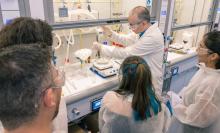
The D-CARBONIZE project is kicking off by recruiting 12 doctoral candidates for training on using biomass to produce bioplastics. The candidates will learn how to use circular chemistry to develop monomers from biochar sources for use in the production of recyclable bioplastics.
Coordinated by the ICIQ, the D-CARBONIZE Project is part of Horizon Europe's Marie Skłodowska-Curie actions and is a consortium of 12 partners.