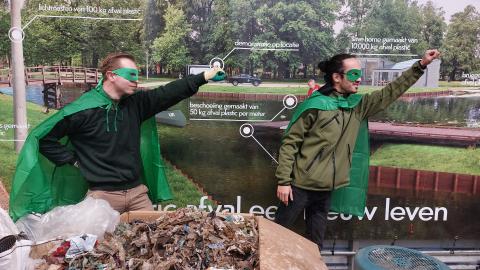
TRANSFORM-CE, an Interreg North-West Europe funded project promoting the circular economy in Europe, is pleased to offer educational programmes for primary and secondary schools to learn about the collection, treatment and recycling of plastic waste. Through these educational programmes schools get teaching materials about plastic recycling.
Did you know that 36% of the total waste generation in the EU comes from construction waste? In order to fully reap the benefits of circular economy a targeted survey has been created online for a study on measuring the application of circular approaches in the construction industry ecosystem for the European Commission.
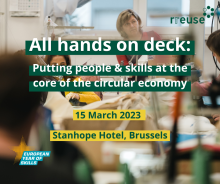
RREUSE is launching a study that highlights the importance of social enterprises in providing skills and training for a successful and inclusive transition to a circular economy. It analyses 18 cases within the social and circular enterprise community, highlighting the challenges faced and policy recommendations needed to facilitate inclusive upskilling and reskilling in the circular economy.
The study presentation on 15 March 2023 will be followed by a discussion featuring social enterprise representatives sharing their experiences running training programs, discussing their impact, and the barriers and enablers to their implementation. Attendees will also have the opportunity to listen to a panel discussion with key stakeholders and policy-makers exploring the role of EU policy in scaling and developing circular training programmes.
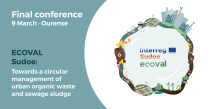
The final conference of the Ecoval Sudoe project (Coordination strategies for sludge and organic waste management and valorization in the SUDOE region) will take place in Ourense on 9 March 2023, where the main results of the project, started in November 2020, will be presented.
Did you know that 37.5% of total waste generated in the EU comes from construction and demolition? And that that amount is predicted to increase by 70% compared to current levels by 2050?
A study by Deloitte aims to boost the application and measurement of circular approaches in the construction industry ecosystem across Europe.
The 2022 Circular Cities Declaration Report is a very important milestone. Not only is it the first progress report for the European Circular Cities Declaration, it also features statements from 40 signatory cities. This makes it the broadest ever assessment of circular economy practices across European cities.
The report shows that considerable progress is being made: half of the 40 cities involved in the programme already have circular economy strategies in place or in development.
This is just the start. By the end of 2025, the aim is to have 150 cities signed up to this Declaration. Together, the signatories are embedding circularity into European cities!