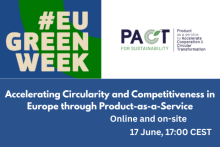
Join this EU Green Week Partner Event to learn more about Miele’s sustainable manufacturer approach, how MediaMarktSaturn, Europe’s largest electronics retailer, is integrating sustainability and circularity, and the innovative Repartly repair and refurbishment concept which closes the loop and extends the lifecycle of devices.
The plastics sector is looking for sustainable solutions - and compostable bioplastics are definitely a good option. AIMPLAS's new methodology subjects materials to simulated industrial composting conditions, so companies can see quickly which of the materials they are working on are feasible.
EU Green Week is here! It will run from 3 to 5 June, and will comprise a huge range of events. The ECESP will be one of the organisers, and so will be involved in some sessions and hosting others. Have a look at the programme!
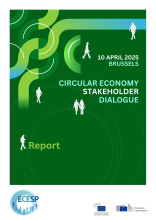
On 10 April, the ECESP held a high-level stakeholder dialogue in Brussels - remember?
Stakeholders discussed the Clean Industrial Deal, the EU Bioeconomy Strategy and the Circular Economy Act and their insights will feed into EU Green Week next week. The report on this event is now ready!
On 10 April 2025, the European Circular Economy Stakeholder Platform (ECESP) held a high-level stakeholder dialogue in Brussels. The purpose was twofold: it provided a forum for stakeholders to exchange views and offer feedback on ongoing legislative proposals, and it gathered valuable insights that will contribute to EU Green Week in June.
This report summarises the discussions which took place.
Join PACCT for Sustainability for its EU Green Week Partner Event!
PACCT's new policy brief setting out recommendations for the Circular Economy Act will be presented first, followed by a Q&A session. If you're attending in person, you can also join the open discussion and networking.
It has organised its operations in line with the principles of circular economy and industrial symbiosis in order to minimise inputs and waste while ensuring that the final product is tasty and healthy.