This call supports industrial symbiosis, waste prevention, recycling, reuse and recovery.
It is intended for Lombardy-based SMEs, including innovative start-ups, and the key areas are plastics, tyres, polymers, textiles, electronics and WEEE (including solar panels), batteries and accumulators, and the recovery of phosphorus and other CRMs.
This call from Sweden's Innovation Agency focuses on support for developing and scaling up sustainable, circular and resource-efficient solutions for forest-based industries as well as the plastics and textile value chains.
At least one of the 3 or more stakeholders must be Swedish.
This Horizon Innovation Action is looking for tools, solutions and associated business models that facilitate the adoption of inclusive circular construction models and more efficient use of buildings.
The goal is to reduce the need to extract raw materials.
This call aims to support innovative fibre-to-fibre recycling solutions that improve circularity, reduce waste and strengthen sustainable resource management across the European textile sector.
Projects are expected to contribute to improved collection, sorting, disassembly, contaminant removal, characterisation and recycling of post-consumer textiles.
Austria’s Federal Ministry for Innovation, Mobility and Infrastructure is funding national R&D projects promoting the resource transition and laying the groundwork for a competitive and sustainable economy.
They are looking for Cooperative R&D projects in areas such as sorting and recycling and condition-based maintenance, and Qualification networks on circular plastics.
EIT Culture & Creativity has launched an open call for projects to develop and scale circular, regenerative and responsible fashion business models grounded in the New European Bauhaus values of sustainability, inclusion and beauty.
Looking for existing businesses, pilots, initiatives or proven concepts that are ready to be developed, deployed or scaled through meaningful collaboration.
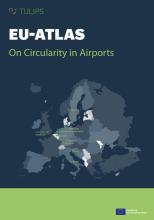
The Atlas highlights key trends, regulations and priorities shaping circular economy progress in EU airports, and outlines options for monitoring impact. Drawing on the use cases, it summarises lessons learned and identifies expected future developments in circular airport operations.
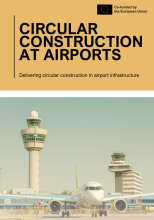
Applying circular principles in an airport environment is not straightforward.
What is needed are approaches that work within the constraints while still enabling progress. The guidance developed through the TULIPS project translates circular construction principles into practical frameworks that support decision making in real airport contexts.
A practical framework for structuring operational, traceability and material-flow evidence into buyer-readable documentation for circular value chains, procurement review and cross-border supplier due diligence.
ORMAT2026is an annual French funding programme that supports investment in sorting and preparation of waste for recycling, the production of recycled raw materials and their incorporation into products, as well as the repurposing, remanufacturing and reconditioning of batteries.
Businesses in the recycling value chain can apply.