This joint position paper from the Wardrobe Change coalition contains recommendations for the EU Strategy for Sustainable Textiles. It has been signed by 25 civil society organisations. The paper sets out recommendations structured around four overarching principles:
Make sustainable textile products the norm
Drive resource-sufficient textile consumption
Leave the linear business model behind
Hold the EU textile industry responsible for its role in the world.
Discover the ECESP Coordination Group's work plan 2021 to advance the circular economy and bring the community together. The Group members will use their expertise and tackle issues in eight key areas identified as essential for the transition to a more circular economy.
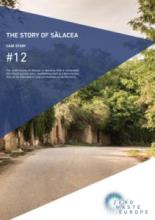
Romania’s recycling rate of 13% is one of the lowest in the EU with most waste going to landfill. The publication explains how the city of Sălacea, in the north-west of Romania, not only managed to quickly rise from almost no waste recycling to 40% in 3 months, but also how the community reduced its overall waste by 55%.
The case study also explains how political will, commitment from local waste operators and involvement of the community were key to the success of the strategy. The municipality introduced door-to-door household separate collection for 5 types of waste (paper and cardboard, plastic and metal, glass, bio-waste, residual waste) and implemented a four-week education programme with citizens before changing the collection infrastructure.
The Asia-Europe Environment Forum (ENVForum) Workshop Series on Circular Plastic Use: Innovate & Change to Close the Loop offers participants the opportunity to design and implement innovative solutions in the field of circular plastic use and waste management. This project planned for June 2021 is organized in association with INNOWO.
ACR+ is launching a publication on the development and implementation of circular bioeconomy strategies in different contexts, focusing on three detailed regional case studies in Navarre, Bayern and Flanders.
Under a cooperation agreement with the French Pays de la Loire region, ACR+ has set up a working group on the circular bioeconomy, with a focus on governance. The working group aims to support the development of local and regional roadmaps for the circular bioeconomy, as public authorities steer and support the development of the circular bioeconomy on their patch.
The publication is the result of activities implemented by ACR+ through the working group.
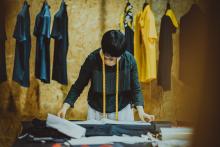
Five consortium partners, including Ecopreneur.eu, have kicked off an EU-COSME funded project “Fashion For Change”. Over the next 3 years, they will help SMEs, designers and start-ups from the European fashion sector scale-up and accelerate their sustainable businesses while increasing awareness about circular fashion among stakeholders, including consumers. Share your views in the quick poll.
Every day, it is clearer that we cannot lose any more time in switching away from a linear economy. The climate emergency together with the economic crisis bringing the region to its knees are basically a perfect storm: to avoid being hit by it, we need to make an eco-innovative transition a priority if we want a more sustainable future for the Mediterranean.
The term "eco-innovation" basically boils down to innovation. What does eco-innovation really mean? And what is the link between eco-innovation and a more circular economy, particularly in the Mediterranean region?
A wide range of initiatives and programmes point towards innovation being key to enabling green growth. Eco-innovation and the circular economy: are they two sides of the same coin?
It is becoming clearer - and more urgent - every day that we need to abandon the linear economy. The climate emergency together with the economic crisis that the region is experiencing makes a transition based on eco-innovation a priority for a more sustainable future for the Mediterranean.
On 15 and 16 April 2021, participants representing governments, international organisations, the private sector, knowledge institutions, and civil society convened for the virtual World Circular Economy Forum + Climate (WCEF+Climate) hosted by the Netherlands and The Finnish Innovation Fund Sitra.
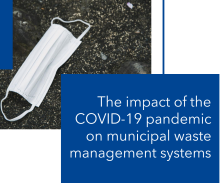
ACR+ has run a survey targeting municipal and local authorities (and their waste operators) to understand and assess the impact of the COVID-19 on their waste systems, in particular regarding the services provided, the quantities collected, the health and safety measures, as well as the finances and communication to users.
The report presents the main information and trends coming out of this survey. It also provides an overview of the measures taken by local authorities to tackle the first wave of the COVID-19 pandemic and the lockdown measures.
Local data were collected to analyse the impact of municipal waste generation and sorting performances. Several illustrations of good practices addressing key challenges are also highlighted.