Coffee!UP has adopted a unique cascade recycling system for used coffee grounds which is in line with the zero waste concept. In this way, they support the circular economy and thus mitigate the impact on climate change.
Through this system, Coffee!UP obtains high-quality ingredients by gradually removing the valuable parts of coffee grounds. These are then used in the cosmetics industry and serve as an input material for making plastic products.
UtilDeco Group SRL has become Romania’s flagship work-integration social enterprise.
In 2023, it linked its textiles and coffee operations in a circular-economy pilot scheme: fabric off-cuts from uniform production and empty jute coffee sacks were upcycled into OPYA Fashion, a limited-edition collection of jackets, totes and accessories.
The enterprise is now scaling circularity through two major projects, one on digital product passports in textile products and the other on hiring workwear.
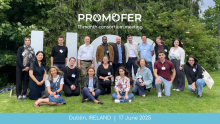
The PROMOFER project aims to use low value feedstock (straw, industrial wastewater and starch, mostly) to manufacture valuable biobased compounds. Specifically, it will improve the fermentation processes and downstream purification, solve bottlenecks upstream and downstream, and produce high-value applications.
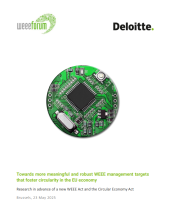
The WEEE Forum aimed to formulate recommendations on potential future targets for WEEE collection and on the method for calculating the collection rate which would foster the circular economy.
This study accordingly conducted a comprehensive assessment of current WEEE collection rate calculation methodologies and proposes a new approach for setting WEEE collection targets in the EU. It took a multi-phase approach, including data collection, model development and sensitivity analysis. Interviews with experts and stakeholders were also carried out to validate assumptions and explore new target-setting approaches.
The study concludes that the WEEE generated method is preferable to the current POM (put on the market)-based collection target.
On 25 June, the Leadership Group on Citizen Engagement & Circular Behaviour hosted the EU Circular Talk "Mainstreaming Circularity: Empowering Citizens for the Transition”. This webinar examined practical pathways to build understanding, shift mindsets and accelerate citizen behaviour change towards the circular transition.
This two-day event of intense cross-border and cross-sectoral pitching, matchmaking and networking aims to link industry to innovative (biobased) technologies, and innovators to investors.
This online workshop will mark the official launch of the final version of the Self-Assessment Tool, a key component of the CCRI designed to support cities, regions and territorial clusters in monitoring circular activities.
The circular economy's contribution to saving virgin raw materials is a widely recognised principle. Its contribution to climate neutrality is still underestimated.
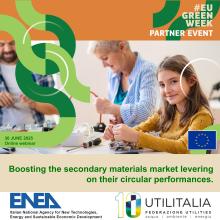
This workshop will explore how tools and policies for boosting the market in and use of secondary materials can exploit the energy and environmental performance of secondary materials.