SUM 2025, the 8th Multidisciplinary Symposium on Circular Economy and Urban Mining, will take place on 21 to 23 May 2025 on the island of Procida.
The event aims to promote continuous interaction (discussion, collaboration, exchange of experiences, etc.) across disciplines, involving any science-based stakeholders or entities.
The Call for Papers is now open! Authors interested in presenting their work at SUM 2025 are invited to submit their papers on the 25 symposium topics, which range from energy and circular economy to contaminants from circular economy in the environment.
The sustainability certification TCO Certified has been driving social and environmental sustainability in the IT industry for over 30 years. Every third year, the certification criteria are updated to push sustainability where it matters most.
They are organising an event where they will discuss the steps needed to drive sustainability in four key areas (climate, substances, circularity and supply chain) and present their new Roadmap for Sustainable IT.
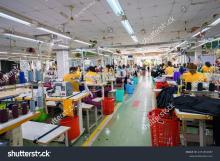
Transformative circular futures in the textile and apparel value chain: Guiding policy and business recommendations in the Netherlands, Spain, and India
Circular economy practices are gaining importance in the global textile and apparel value chain. However, the circular economy's social dimension is often overlooked.
To address this problem, this study develops transformative circular futures (TCFs), co-created circular economy scenarios that are diverse and systemic and embed social impact considerations. The aim is to inform policy and business decision making in the textile and apparel value chains of India, the Netherlands and Spain.
The study recommends normalising living wages for direct, indirect and informal workers, implementing regulations challenging the patriarchy, eliminating gender pay and establishing permanent global committees of social actors.
Walking the circular talk: Analyzing the soft and hard aspects of circular economy implementation of ten business cases within the textile and apparel value chain
Companies in the textile and apparel value chain have been increasingly implementing circular economy practices. However, implementation has focused on the techno-environmental (hard) dimension, and partly overlooked the (soft) social dimension. There is a lack of empirical knowledge about how businesses in this value chain simultaneously manage soft and hard aspects of circularity and what kind of socio-environmental impact they generate.
This research analysed the soft and hard aspects of ten circular business cases from three countries. It demonstrates that both aspects are integral components of a comprehensive transformative circular transition framework that facilitates the adoption of more inclusive and circular practices while improving sustainability performance.
This COP16 side event, organised by the ECESP's Leadership Group on Biodiversity & Climate, will explore the opportunities and anticipated benefits of using the circular economy as a tool for mainstreaming biodiversity in economic sectors.
This paper reviews digital tools that support the transition to a circular economy in the built environment.
It explores how computer-aided design, building information modeling and computational plugins can assist architects and engineers in creating more sustainable buildings. While Life Cycle Assessment (LCA) remains the main approach for evaluating environmental impacts, the study highlights other methods and tools that can help assess circular design strategies, such as computational methods to design with reused elements and circularity indicators. The paper identifies both the strengths and limitations of these digital tools.
This research is useful to academics and to practitioners designing buildings aligned with circular economy principles.
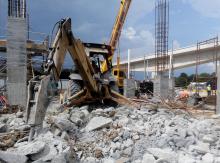
Concrete accounts for 8% of the world's CO2 emissions. Efforts are being made to reduce its embodied carbon, but reusing concrete from existing buildings has significant untapped potential.
This study presents an innovative digital workflow for predicting the lifespan of concrete elements, CO2 uptake via natural carbonation and embodied carbon savings through reuse. The workflow was tested in a building from the 1960s with high reuse potential.
It found that most precast elements would last long enough to be reused effectively and that reuse is better for the environment than carbonation.
The digital workflow is useful for quickly assessing lifespan, carbonation and embodied carbon of concrete. It is a useful tool when designing for reuse.
Recycling Flexible Packaging will focus on finding circular solutions to the problem of flexible plastic waste.
It is intendedfor professionals involved in the design, production, regulation or recycling of flexible packaging, and will be a chance to gain insights into the latest breakthroughs and stay ahead of present or future legislative changes.
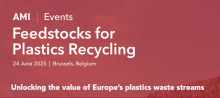
Feedstocks for Plastics Recycling will focus on unlocking the value of Europe’s plastics waste streams. It will be an opportunity to explore the challenges and possibilities of acquiring feedstock for recycling in Europe.
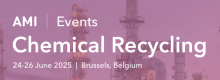
Chemical recycling is big and set to get bigger - after all, it helps overcome the limitations of traditional plastics recycling (and we have so much plastic to recycle...).
However, there are still problems and this event will address the challenges and opportunities facing the development of these emerging technologies and their integration into the supply chain.