Concrete accounts for 8% of the world's CO2 emissions. Efforts are being made to reduce its embodied carbon, but reusing concrete from existing buildings has significant untapped potential.
This study presents an innovative digital workflow for predicting the lifespan of concrete elements, CO2 uptake via natural carbonation and embodied carbon savings through reuse. The workflow was tested in a building from the 1960s with high reuse potential.
It found that most precast elements would last long enough to be reused effectively and that reuse is better for the environment than carbonation.
The digital workflow is useful for quickly assessing lifespan, carbonation and embodied carbon of concrete. It is a useful tool when designing for reuse.
Recycling Flexible Packaging will focus on finding circular solutions to the problem of flexible plastic waste.
It is intendedfor professionals involved in the design, production, regulation or recycling of flexible packaging, and will be a chance to gain insights into the latest breakthroughs and stay ahead of present or future legislative changes.
Feedstocks for Plastics Recycling will focus on unlocking the value of Europe’s plastics waste streams. It will be an opportunity to explore the challenges and possibilities of acquiring feedstock for recycling in Europe.
Chemical recycling is big and set to get bigger - after all, it helps overcome the limitations of traditional plastics recycling (and we have so much plastic to recycle...).
However, there are still problems and this event will address the challenges and opportunities facing the development of these emerging technologies and their integration into the supply chain.
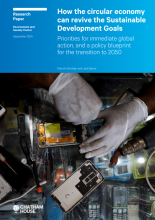
With progress on the UN’s Sustainable Development Goals (SDGs) badly off track, solutions are needed - and the circular economy has clear potential.
This Chatham House paper explores how the circular economy could support each of the 17 SDGs and argues for this concept to be put at the heart of emerging plans to drive sustainable development towards 2050.
It identifies five priorities for action: embedding principles of justice and inclusivity into the circular transition; increasing international policy coordination; reforming the financial architecture to ensure the circular economy gets the investment it needs; rewiring the global system of trade to make it easier to trade circular products and services; and developing common standards and metrics.
The I AM CIRCULAR challenge is your opportunity to showcase your innovations and lead the charge in the circular economy. This is not just a competition: it's a celebration of transformative ideas that are reshaping our world. Apply by 15 November!
Join the first session of the B-Trust masterclass series on Unlocking Consumer Trust in Innovative Biotechnologies.
This session will explore how consumer trust affects biotech innovation in the agri-food and bio-based sectors. Gain insights into stakeholder engagement, risk communication and building public trust.
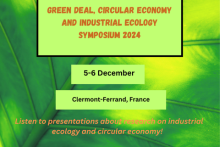
The Green Deal, Circular Economy and Industrial Ecology Symposium 2024 will take place on 5-6 December at the MSH Clermont in Clermont-Ferrand. It will bring together researchers and practitioners who will present their research on industrial ecology and circular economy.
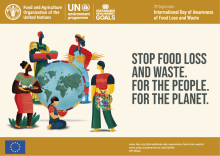
This year, the International Day of Awareness of Food Loss and Waste will be celebrated on 27 September. Get involved in the campaign by sharing free materials on digital channels and spread the word!