Society 2030: Spirit of Progress is Diageo's 10-year action plan to help create a more inclusive and sustainable world. This global leader in beverage alcohol has set itself 25 goals aligned to the UN's SDGs.
Given the need totake biodiversity more into account in circular economy projects, this study aims to stress the links between the two and to clarify the role played by the circular economy in preserving ecosystems.
Several guiding circular economy principles contribute to reducing the impacts of our activities on ecosystems, such as non-toxicity, optimisation of resource management, promotion of renewable resources and looping of flows. The study also highlights the fact that each lever for implementing the circular economy can and should factor in biodiversity: land-use planning, normative framework, innovation, awareness raising and training, and economic support.
Ethical smartphones, multifunctional strollers, remanufactured milking robots and bicycles-as-a-service: the Dutch manufacturing industry offers plenty of inspiring and groundbreaking innovations for a circular economy. International cooperation is nonetheless crucial to deliver and accelerate the circular transition as the value chains of the manufacturing industry cover the whole world.
With this publication, Holland Circular Hotspot and the Dutch Circular Manufacturing Implementation Programme (UPCM) aim to bring insights and case studies from the Netherlands to an international level, in order to inspire everyone around the world to act and kickstart circular development.
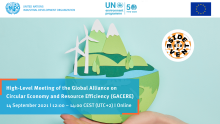
You are invited to follow GACERE's (Global Alliance on Circular Economy and Resource Efficiency) first high-level meeting online on 14 September 2021 in the sidelines of the upcoming World Circular Economy Forum.
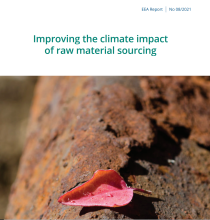
The extraction/processing of raw materials is associated with potentially significant environmental impacts, including contributing to approximately half of the greenhouse gas (GHG) emissions globally. In the EU, non-energy, non-agricultural raw materials account for 18% of GHG emissions associated with EU consumption.
Given the EU's commitment to reducing its GHG emissions, and the European Green Deal's aspiration to achieve a climate-neutral continent by 2050, mitigating climate impacts from raw material production is central to the EU's climate agenda.
All activities associated with collecting waste materials for recycling lead to GHG emissions. Especially for metals, however, their contribution to emissions is only a fraction of the emissions saved by not using primary metals.
Every year, about 100 billion tons of material are taken from the planet - but only 10 billion are circularized. The results of the TOP 10 study clearly highlight the differences between the systems: the waste culture and concepts are different in the Global North and the Global South, as are the objectives of the respective legislations.
In the Global North, the goal is to decouple waste generation from consumption. In the Global South, waste increases with per capita income; here, the old consumption patterns and images of the rich Global North are often emulated.
Scorecards are used in the study to assess individual materials and their circular maturity in the region. The overall score is shown in the summary per material.
Circular Valley aims to establish a future-oriented circular economy.
It was founded in 2021, and already over 100 startups from all around the world have participated in its Circular Economy Accelerator.
It is funded by the North-Rhine-Westphalian Ministry of the Economy with a view to leveraging and developing the region's strengths through innovative circular economy concepts, products and business models.
Members can connect up with 140+ partners from industry, R&D and government from the Circular Valley network. The platform also organises expert workshops, tailor-made training sessions and an intensive coaching and mentoring programme.
Pryme converts plastic waste into valuable products on an industrial scale. It has developed a new approach to an existing and proven chemical recycling technology. Pryme has optimised the pyrolysis process by adding proprietary characteristics.
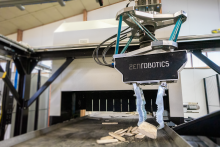
ZenRobotics has harnessed the power of artificial intelligence to improve the quality of waste sorting. ZenRobotics' AI-powered robot technology is used at its material recovery facilities (MRFs) to capture valuable high-purity materials from waste streams in construction and demolition, commerce and industry, and municipal solid waste.
Welcome to the circular economy event of the year, World Circular Economy Forum 2021, on 13-15 September 2021!
Hosted for the first time in North America, WCEF 2021 will focus on the system level changes, or “game changers,” needed to accelerate the transition to a circular economy.