Nordsol specialises in transforming biogas into sustainable bio-LNG (liquefied biomethane) for long-haul, heavy-duty transport. They work with organisations interested in setting up bio-LNG plants on-site to capitalise on their biogas facilities.
This conference will showcase global good practices in resource and waste management.
It will highlight the critical role of effective systems in protecting health, the environment and economies, promoting circular economy principles and strengthening international collaboration to help move the world beyond waste.
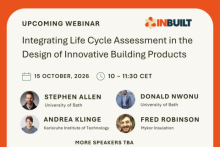
This webinar will explore how Life Cycle Assessment (LCA) can be both a rigorous environmental tool and a strategic asset for the product development of buildings and for supporting innovation, market readiness and commercialisation.
Industry experts will share practical insights on integrating LCA into sustainable product development, with a focus on the emerging and highly innovative products developed by the INBUILT project.
This conference will focus on the European policies, technologies and business models that are reshaping circularity, from the Circular Economy Act and textile legislation to the Digital Product Passport and artificial intelligence.
This CORDIS Results Pack shows how the EU is funding research and innovation to create a sustainable, climate-neutral and circular textile sector.
It showcases nine Horizon research projects focused on optimising resource use and minimising waste across the entire textile production and consumption cycle.
Getliņi EKO manages the largest solid municipal waste landfill in the Baltic states.
The modern waste management centre processes household, biological, production and construction waste from the Central Latvia waste management region. The company produces electricity and heat from the gases produced by both biodegradable and non-biodegradable waste.
B-Plas treats sludge from municipal wastewater plants, industrial facilities, agro-food industries and paper mills.
By developing and installing on-site plants, sludge is converted into raw material for biopolymers and the residual volume needing disposal is reduced by up to 80%.
FUELGAE is an EU-funded project working on converting CO₂ emissions into sustainable advanced biofuels for air and sea transport and heavy vehicles that are difficult to electrify. Microalgae absorb the emissions and are then turned into biofuels.
Climate change, inconsistent policies, greenwashing concerns and the promise of AI-powered sorting systems are reshaping how the wood sector must adapt.
The Wood2Wood project is addressing a structural blind spot in circular economy transitions: the future occupations needed to make wood reuse viable at scale.