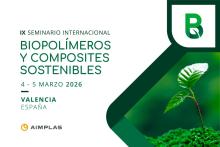
The seminar will bring together leading experts to explore the challenges and opportunities of sustainable bioplastics and biocomposites in the context of the circular economy.
The conference will explore how advanced AI tools and applications are accelerating the transition towards a circular and sustainable chemical and materials industry.
They are calling for posters: the deadline is 28 January!
The conference will explore how advanced AI tools and applications are accelerating the transition towards a circular and sustainable chemical and materials industry.
This conference will tackle climate change and ways to prevent it, including innovative solutions that can be implemented under the Green Deal Strategies.
They're calling for abstracts: the deadline is 1 September!
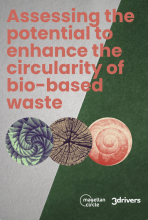
This study commissioned by the EEA assesses the potential to enhance the circularity of bio-based waste within the framework of the 2025 update of the EU Bioeconomy Strategy.
It focuses on identifying opportunities to move bio-based waste streams up the waste hierarchy, retain technical and economic value and minimise environmental impacts.
The study maps waste generation, collection, treatment and reporting practices across the EU and the technologies for managing biowaste.
It finds that better separate collection and development of high-value recovery pathways could reduce environmental pressures, greenhouse gas emissions and import dependence, though technological feasibility and scalability remain uncertain.
Fibenol transforms forestry and wood industry residues into sustainable biomaterials used in the biomaterials and biofuels, packaging, construction, and food, feed and pharmaceuticals industries.
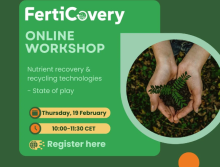
The FertiCovery project focuses on nutrient recovery and the production of fertilisers from biowaste, manure and wastewater.
This workshop will bring together project partners and stakeholders to review, discuss and validate the final list of indicators which will serve as the basis for benchmarking nutrient recycling and biobased fertiliser production technologies.
Eco Bio® Croatia has developed an innovative biopolymer made from fruit and vegetable waste. It is an environmentally-friendly, non-toxic alternative to single-use flexible plastic which can be composted at home.
Cupffee cups are designed to replace single-use plastic and paper ones. They are made from plant-based material and using a zero-waste production process.