The Commission's public consultation on the forthcoming Circular Economy Act is still open. It will gather input from a wide range of stakeholders and the broader public on the bottlenecks and opportunities involved in rolling out a circular economy.
If you're active in the circular economy field, you must have views on this: this is your chance to tell the Commission!
This is a key event on waste management. 400 or so papers will be presented on issues such as waste policy and legislation and construction & demolition waste from disaster waste during various types of sessions, from Q&A sessions to practical design labs. Come and see what's being done in this field!
Why aren't we more circular? How can we be more circular? This video shows you how to get ready for the EU's Circular Economy Act and just why switching to this economic model is so important.
The European Commission is seeking stakeholder input on how to make EU environmental laws faster, easier and cheaper to implement, thereby making life easier for EU businesses. Is this something you feel strongly about? Then tell them!
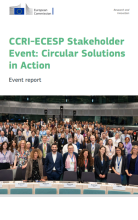
On 5 June, the Circular Cities and Regions Initiative (CCRI) and the European Circular Economy Stakeholder Platform (ECESP) joined forces to host a stakeholder event in Brussels and online as part of EU Green Week 2025. Have a look at CCRI's report on what was said during this event!
Over the past decade, the EU has demonstrated an unprecedented commitment to advancing a circular economy, advocating for action at national, regional and local level. However, most economies remain predominantly linear.
This report provides a comprehensive analysis of circular economy practices, challenges and opportunities in cities and regions, building on a survey of 64 cities and regions of the EU, lessons learned from 10 place-based policy dialogues in specific cities and regions, and desk research. It concludes with policy recommendations to accelerate a territorial approach to the circular economy for place-based policies that are aligned with EU-wide goals.
THE LIFE BIOBEST project aims to guide the mainstreaming of best bio-waste management and recycling practices, with a view to enriching depleted soil with high quality compost.
Its Comprehensive Guidance sets out key policy recommendations to strengthen the EU legal framework for bio-waste management. Drawing from extensive research and stakeholder consultation, it outlines three interconnected areas for improvement: boosting effective models for separate collection and recycling, promoting reliable markets for compost and digestate, and enhancing monitoring and enforcement of bio-waste regulations.
It provides policy measures to help close the gap between current practices and potential capture rates, addressing the fact that only 26% of kitchen waste is collected separately in the EU.
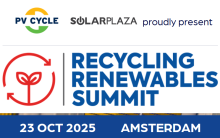
This conference will focus on future-proofing clean energy, end-of-life assets, circular energy markets, and advanced technologies and successful business models.
Join top asset owners, recyclers, manufacturers and investors at the second Recycling Renewables Summit and help shape the future of circular renewables.
While circular economy practices offer substantial environmental and economic benefits along with local job creation, their implementation requires significant adjustments in working conditions and practices.
This briefing dives into two of the circular building pathways identified as having high social impacts in the Circular Buildings Coalition’s 2024 Four Pathways Report: 1) Build with the Right Materials; and 2) Build Nothing.
These pathways are explored, along with their regulatory and market-level drivers, barriers and the measures needed to safeguard workers.
The Commission has launched a consultation on harmonising the classification of certain waste types (“green-listed” waste) to facilitate their shipments across borders. It's open until 31 October and aims to gather input from a range of stakeholders on waste streams to be addressed. Let them know what you think!