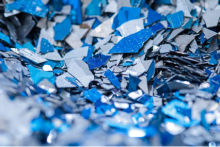
The project Recycling of broken Si based structures and solar cells is part of CABRISS, a European collaboration aimed to develop a circular economy mainly for the photovoltaic (PV), but also for other industries such as electronics or metallurgy.
The paper presents some tests in which broken solar cell structures coming from an early stage in the PV production process chain as well as broken finished solar cells have been recycled into new silicon (Si) feedstock through demetallisation, purification and directional solidification.
The paper explores two different routes to remove diffusion layers and anti-reflection coating (ARC) on broken cells. It also presents the characteristics of ingots produced with the Si-feedstock from the two routes by directional solidification.
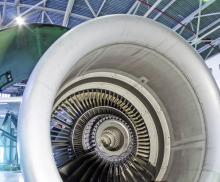
This report assesses the Aviation sector value chain in the context of Circular Economy principles.
It offers an overview of the aircraft lifecycle, new supplier-consumer programmes already initiated by the industry and a proposal for the reconversion towards a more circular business model.
The assessment of the value chain was carried out according to the Circular Economy perspective (Redesign, Reduce, Reuse, and Recycle).
This report advises the companies involvled in the EACP-EUROSME project, as an instrument to start the implementation process towards a Circular Economy business and as research for further financial support for project funding.
Infinited Fiber has developed a technology that can turn cotton rich textile waste into new fibres for the textile industry. Not just once, but infinitely. These new Infinna™ textile fibres can be recycled again and again without decreasing the quality of the fibre.
Ioniqa is a clean-tech-spin-off based in the Netherlands that has developed an innovative process to recycle all types and colours of PET waste into high quality secondary raw materials that are infinitely recyclable.
Aurubis, an expert in multi-metal recycling, and Grillo-Werke, which specialises in zinc and sulphur products, have set up a perfect closed loop for non ferrous trace elements.
Residual zinc from copper production is used by Grillo-Werke as a secondary raw material for zinc sulfate. Residues from this production - including copper, tin and lead - are then fed back to Aurubis.