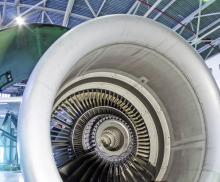
This report assesses the Aviation sector value chain in the context of Circular Economy principles.
It offers an overview of the aircraft lifecycle, new supplier-consumer programmes already initiated by the industry and a proposal for the reconversion towards a more circular business model.
The assessment of the value chain was carried out according to the Circular Economy perspective (Redesign, Reduce, Reuse, and Recycle).
This report advises the companies involvled in the EACP-EUROSME project, as an instrument to start the implementation process towards a Circular Economy business and as research for further financial support for project funding.
A web-portal to help cities become circular: the Circular City Funding Guide was launched on 31 January 2020. The guide provides information and support on funding and financing of the circular economy in an urban context. It has two main target groups: fund-seekers and funders of circular projects in cities.
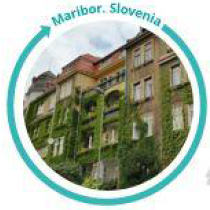
The WCYCLE Maribor project provides for an innovative urban circular economy system, offering a new business and economic model for the city in the field of efficient resource management.
At the intersection of science, design, and waste management, PuriFungi develops natural cleaning systems. PuriFungi's new product is an ashtray made of mycelium and cigarette butts.
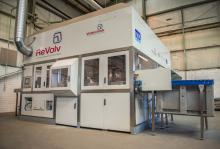
Votechnik has created a unique state-of-the-art recycling technology, the ALR 4000 machine, which safely removes hazardous waste materials from LCD flatscreen panels and monitors through a fully automated process.
To increase clarity in circular projects, France's standardisation body AFNOR developed a voluntary standard, XP X30-901, that proposes a common understanding, laying out the terms, principles, and practices for all actors to agree to work with on the subject.
XP X30-901 proposes a 3 x 7 matrix covering the three dimensions of sustainable development - environment, economy, society - and the seven areas of action of the circular economy: sustainable procurement, ecodesign, industrial symbiosis, functional economy, responsible consumption, extension of service life, and the effective management of materials and products at the end of their life cycle.
In this report, six members of the standardisation commission share their experiences on this voluntary standard.
Waste and pollution from the production of textiles and clothing have become critical global issues. This report launched by Ecopreneur.eu and the European Sustainable Business Federation calls for decisive policy measures based on 5 pillars:
Innovation policies: funding research programmes, investment tax deduction, support for technological development and SMEs.
This paper aims to outline the new role financiers have to play to accelerate the transition towards a circular economy. This guide will help financiers thrive in the circular economy through 6 practical guidelines.
In order to better understand how to address the challenges in implementing circular strategies, Circle Economy and the Sustainable Finance Lab worked with circular business managers and financiers to identify ways to fund circular businesses, a key element they desperately need to achieve. Building on this research the authors outline 10 Steps to Financeability.
ABN AMRO, ING and Rabobank, all members of the FinanCE working group alongside FGGM and the Ellen MacArthur Foundation, have published the first publicly available finance guidelines for the circular economy in July 2018 as input to the High-Level Political Forum on Sustainable Development. These guidelines aim to promote and develop the role finance can play in the transition.