On average, a European citizen produces half a ton of waste a year. This amounts to 2.5 billion tons yearly for the entire European Union.
The Joint Initiative on Circular Economy (JICE) is a partnership between the EU’s largest national promotional banks and institutions and the European Investment Bank to invest at least €10 billion in the circular economy by 2023.
It provides loans, equity investment, guarantees, innovative financing structures and technical assistance.
The initiative will support projects that prevent and eliminate waste, increase resource efficiency and promote circular business models. Eligible projects can be submitted to the respective JICE partners.
European project BIOnTop obtains promising results in development of new recyclable and compostable packaging. In its first year, BIOnTop has achieved good results in its experimental work on copolymers and compounds with customized biodegradability and multifunctional coating solutions with customized properties.
The post-COVID-19 recovery plan should be extensive, as the effects of the pandemic on people and economy have, in many cases, been devastating. The recovery plan must also fully support the green transition to guarantee resilience over the long term.
The circular economy has the potential to raise EU GDP by billions of euros, and create around 700,000 extra jobs by 2030. With this in mind, the economic approach should be an integral part of that recovery. It is one of the messages of a new EUROCITIES policy statement on the EU Circular Economy Action Plan that sets out how cities, as significant engines for economic growth, can drive the circular economy to unlock economic, environmental and social benefits.
The aim of Poland's Roadmap towards the Transition to the Circular Economy (CE), which was adopted in 2019, is twofold: first, to identify cross-cutting measures capable of having the broadest possible impact in Poland, both socially and economically; and second, to prioritise areas that will enable Poland to take advantage of its current opportunities, and to deal with existing or future challenges.
The Roadmap focusses on 5 areas in particular:
Sustainable industrial production
Sustainable consumption
Bioeconomy
New business models
implementation, monitoring and financing of CE.
The Roadmap includes a set of tools, which are not purely legislative, to create the conditions for a new economic model in Poland.
In 2019 the European Commission set out a policy guideline to address global environmental challenges and circularity. EURATEXand its members welcome the ambition of the EU Institutions to change the old way and commit to engage with all relevant parties to deliver and implement a new Textile Strategy to boost the circular economy and be fit for the present and future generations.
This strategy by EURATEX is a starting point, with insights into solutions based on a 14-month consultation with members, involving over 100 companies and key stakeholders, focused on applied circular practices and future opportunities. It prioritises removing barriers to a large-scale uptake of circular economy in textiles, sets out 12 key points and puts forward 38 proposals.
Holland Circular Hotspot is a private-public platform in which companies, knowledge institutes and local authorities collaborate to promote and support international collaboration and knowledge exchange on Dutch circular economy, and the Netherlands Enterprise Agency, a government agency for sustainable, agricultural, innovative and international business development and growth, have come together to share insights, networks and resources to help kickstart circular developments that will boost the Sustainable Development Goals (SDGs).
Circular examples from various market segments closely linked to SDGs such as agri-food, manufacturing and the built environment are included in the brochure next to cross-sectoral topics such as consumer goods or plastics.
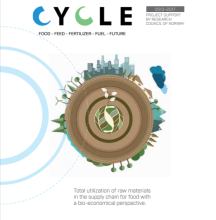
The CYCLE 2013-2017 interdisciplinary project, supported by the Research Council of Norway, focused on the food supply chain from both agriculture and marine sectors, with the aim to improve utilisation of raw materials in a bio-economical perspective.
Aragón Circular is an economic strategy that aims to boost the circular economy in the entire region of Aragon. Its objective is to create a political, economic, and social framework that will allow Aragon to move towards an innovative circular economy. Furthermore, this strategy will generate high-quality employment and provide the backbone for the territory.
The European Investment Bank's Circular Economy Guide aims to promote a common understanding of circular economy, and raise awareness about and promote circular solutions.
The Guide provides information about EIB’s lending and advisory activities in this field, and communicates the vision of how the EIB can further support the transition to a circular economy.
This retrospective report is a review of the plans set out by Circular Flanders in the Kick-off Statement.
The most important finding? A good deal more was accomplished than initially anticipated. For example, the opportunity to launch three Open Calls, permitting the funding of over 130 innovative circular economy projects. The Green Deal on Circular Construction was also an unprecedented opportunity, as was the complementary reinforcement of the OVAM team of experts in ecodesign and area-specific operations, allowing the scope to expand.
This retrospective report is an interactive PDF. External links to downloads or online resources have been embedded on each project page for easy accessibility.