The World Bank has designed a survey to identify key challenges facing the public sector in the EU Member States when transitioning to a circular economy. The "Survey for the Capacity of the Public Sector in Mainstreaming Circular Economy" aims to understand these challenges and discover what capacities are required to address them.
This model reinforces Wallonia's objective of renewing its industry and will ensure that the region is better able to cope with future crises.
The strategy will achieve this by fully integrating the alterations and adaptations required by climate change, and by making Wallonia more independent in terms of resources and global supply chains.
Wallonia’s vision is based on the following guidelines:
Moving towards a carbon-neutral economy;
Moving towards a resilient and inclusive economy;
Stimulating innovation as a catalyst with emphasis on the digital transition and nature-based solutions.
Particular attention is paid to the six value chains: Construction, Plastics, Food, Water, Textiles and Metallurgy.
The Intermunicipal Community of the Tâmega e Sousa is a public entity composed of 11 municipalities in Northern Portugal. It has developed a circular project aiming to enhance circular economy achievements and green transition agendas within local authorities, municipal companies and intermunicipal entities. In this regard, it has created the manual Economia Circular nas Compras Públicas on circular economy in public procurement to assist municipalities.
The manual presents an in-depth mapping of circular economy practices for a Portuguese strategy for ecological public procurement, as well as indications on how to address the circular economy challenge, with a range of criteria and procedures for public procurement.
The EPA is seeking proposals from the research community to help identify solutions to climate change and other emerging and complex environmental problems.The funding will be provided under the four EPA Research 2030 interconnected research hubs, including "Facilitating a green and circular economy".
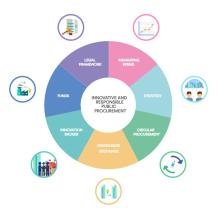
This E-Learning module on Innovative and Responsible Public Procurement guides learners, for instance, through the process of building a procurement strategy and procuring in a circular way.
Circular Gothenburg focuses on resource efficiency to reduce climate change and achieve circular material flows.
It has three target groups: citizens, city departments and businesses. For all three target groups, the goal is to make it simple, straightforward and attractive to participate in transformational circular work. This includes the municipality’s in-house processes and activities which help people to live in a more circular way. One of these activities is the Fixotek: staffed facilities, close to where people live and open to everyone, where people can meet, learn, repair and redesign products, borrow tools and swap toys, clothes and books.
The Sustainable Procurement Platform is managed by ICLEI Local Governments for Sustainability. It provides up-to-date news, case studies, events and guidance on sustainable procurement from across the world.
Its focus is sustainable and circular procurement. Circular procurement involves considering the whole lifecycle of products throughout their supply chain and ensuring that the products and services acquired generate benefits not only for the buyer, but also for the environment, society and the economy.
The platform showcases replicable sustainable, circular and innovation procurement approaches and strategies. Its resource centre contains over 200 case studies setting out the methods used, the obstacles overcome and successes achieved in implementing sustainable public procurement.
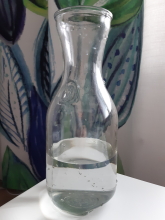
Mutualia, a social services and medical care provider in the Basque Country, Spain, has installed water fountains connected to the public water network to use tap water instead of buying bottled water.
In 2018, Hjørring Municipality decided to embark on a pilot project to increase the recovery and recycling of bricks when procuring demolition services for two buildings at the end of their functional life. Once cleared, the sites were destinated to be a part of a new climate adaptation project including a new rainwater collection basin and a recreational area.