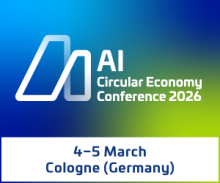
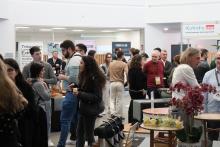
The conference will explore how advanced AI tools and applications are accelerating the transition towards a circular and sustainable chemical and materials industry.
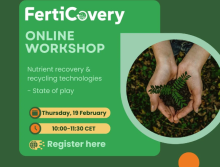
The FertiCovery project focuses on nutrient recovery and the production of fertilisers from biowaste, manure and wastewater.
This workshop will bring together project partners and stakeholders to review, discuss and validate the final list of indicators which will serve as the basis for benchmarking nutrient recycling and biobased fertiliser production technologies.
A new EU-funded project has been launched to develop a deposit-return system for used textiles across Europe. Known as TexMat, the initiative will reward consumers for returning reusable and recyclable items, while notifying producers when discarded textiles require waste management.
The ESNI-NERM (The European Sustainable Nutrient Initiative (ESNI) Conference and the Nutrients in Europe Research Meeting (NERM) conference will be an opportunity to present and discuss scientific evidence and technological innovations that can support the European Commission’s goals on nutrient management.
The ESNI-NERM conference will be an opportunity to present and discuss scientific evidence and technological innovations that can support the European Commission’s goals on nutrient management.
The conference will take place on 28-29 April and they are calling for abstracts. Deadline: 30 January!
Growingpaper's printed material is made using biodegradable inks on paper made from recycled paper or cotton waste - with flower seeds in it. Once you've finished with it, put it aside until spring then plant it and help biodiversity!
This conference took place on 10-11 December in Spain, bringing together over a hundred plastics recycling specialists who debated competitiveness and regulation in plastics recycling in Europe. See the highlights!
Waste To Resources Latvia - boosting regional sustainability and circularity is a Lifeproject which provides a framework for coordinating, testing and scaling up circular economy solutions at national level, involving multiple partners and thematic implementation areas.
So far, it has launched national digital platforms for reuse and industrial symbiosis, improved data availability and decision-support tools for the waste management sector, and enhanced quality assurance of secondary materials through an accredited polymer testing laboratory.
Paper recycling is one of Europe’s greatest circular economy achievements. However, regulatory fragmentation, market imbalances and rising operational risks are placing pressure on recyclers.
Recycling Europe calls on EU policymakers to act. This manifesto proposes four measures to safeguard the success story of paper recycling:
Design circular paper products: recycling should be expected and the CEA should drive demand;
Reduce EU administrative burdens: EU-wide rules on end-of-waste criteria for recovered paper and shipments are needed;
Secure access to global markets for recovered paper: not all recovered paper can be re-used within Europe;
Address the fire risk from lithium batteries in waste management facilities: proper waste sorting is crucial.