Specialists, companies and key stakeholders from the packaging value chain will address the challenges and opportunities posed by the transition toward more sustainable models and explore the latest trends in barrier packaging materials and solutions.
This edition of Science for Environment Policy is a collection of seven previously published articles on scientific studies relevant to the circular economy. Read about battery collection, whether laypeople can really understand LCA data, chemical recycling and why people throw away clothing.
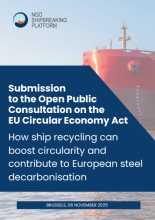
With a significant number of ships expected to reach the end of their service life shortly, ship recycling presents a strategic opportunity for Europe. Boosting domestic ship recycling will:
secure a steady supply of secondary raw materials and so strengthen Europe’s industrial resilience and strategic autonomy;
make a meaningful contribution to the decarbonisation of the EU steel and construction sectors, supporting Europe’s broader climate and circular economy goals;
create green jobs in the recycling and waste management sector;
align with EU environmental policies preventing the export of hazardous materials and restrict exports of waste that harm the environment and human health in third countries.
This report looks at how scrap steel from the EU's increasing numbers of end-of-life ships can help decarbonise the European steel industry, strengthen industrial resilience, create green jobs, preserve and develop maritime skills and build a truly circular economy.
The steel industry expects demand for scrap to rise due to calls for lower carbon footprints and the implementation of new steelmaking technologies. Ship recycling is a significant and largely untapped opportunity to meet this demand.
Policies should support the development of safe and environmentally sound ship recycling, and stimulate material recovery and reuse. This will enable the EU to reduce dependence on imports, conserve valuable resources and advance toward climate neutrality.
A number of ECESP Coordination Group members have published their contributions to the call for evidence on the Circular Economy Act. The Group covers a wide spectrum of interests, and this necessarily influences their views on what should be included in the CEA and just how the Act should drive on the circular economy. Have a look!
In this position paper, FEAD offers its input for the Circular Economy Act consultation.
It supports a CEA that turns circularity into a core competitiveness strategy for Europe by:
creating a predictable, integrated single market for recycled materials;
activating strong, durable demand for recycled materials;
aligning fiscal and financial tools with circular outcomes;
strengthening governance, enforcement and administrative capacity so rules deliver in practice.
It proposes a binding target of 25% by 2030 for the Circular Material Use Rate. It argues that recycling and recovery must become industrial-scale resource streams, and that robust recovery and final treatment systems for residual waste are key for safeguarding system resilience and environmental protection.
The Circular Economy Act is a pivotal opportunity to translate Europe’s ambitions into functioning markets by removing obstacles to the free movement of recycled materials and creating strong demand for circular products.
Recycling is a strategic enabler of circularity and plays a critical role in securing Europe’s economic resilience and decarbonisation agenda. Accordingly, Recycling Europe's policy recommendations aim to unlock demand, establish a level playing field for recycled materials and support the development of a globally competitive recycling industry aligned with the EU’s environmental and strategic objectives.
The Horizon Europe RECREATE (REcycling technologies for Circular REuse and remanufacturing of fiber-reinforced composite mATErials) project aims to develop a set of innovative technologies which will exploit the potential of end-of-life complex composite waste.
It is organising a webinar looking at practical and emerging approaches for recovering value from end-of-life composite parts.
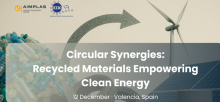
This workshop aims to connect the worlds of recycling and renewable energy, fostering synergies between materials circularity and technologies such as photovoltaic panels, wind turbine blades and batteries. Come and explore how recycled plastics and rubber can drive the clean energy transition!
Biodegradable plastics are often perceived as environmentally friendly, but how true is this in practice, especially in the cold climatic conditions of Northern Europe and in anaerobic biowaste treatment?
This timely webinar explores the realities of plastic biodegradation in biowaste recycling facilities as well as soil and aquatic environments in northern climatic conditions.