Servicios Medioambientales de Valencia processes used mattresses into fractions for reuse. Their scalable model produces bales of polyurethane foam and steel which can be used as secondary raw materials.
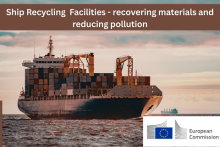
Ship recycling plays a key role in advancing the circular economy - after all, ships do contain large amounts of high-quality steel and other valuable materials.
The European Commission has just adopted the 15th edition of the European List of Ship Recycling Facilities: read about what this means!
i-Foria Italia has validated a technology for recycling nappies, incontinence aids and sanitary pads - products which have always been considered unrecyclable owing to the wide mix of materials in them. i-Foria's technology separates the components and returns them to the production loop.
The RECREATE project aims to come up with innovative technologies which will turn end-of-life composite waste into useful feedstock.
This conference will explore trends in the EU composites market and highlight applications across sectors such as automotive, wind energy, aerospace, transport, construction, naval industries and sports.
Around a thousand participants and up to 90 speakers will meet in Berlin and exchange ideas for the circular transformation.
The congress will feature panel discussions with high-profile speakers from politics and science, best practices from business, inspiring keynotes on the transformation of our society and many opportunities for networking.
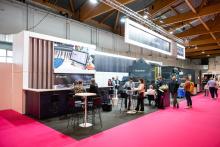
The Textiles Recycling Expo will focus on solving the pressing issue of textile waste.
It will explore the broader picture of recycling: materials innovation, logistics, recycling infrastructure, manufacturing and policy. Over 160 exhibitors will showcase the latest developments in textile collection, sorting, recycling technologies, fibre regeneration, traceability systems, AI-driven automation and circular material innovation!
The REFRESH project is working on making wind energy more circular by developing more efficient ways to recycle and reuse wind turbine blades, which are made of hard to recycle composites.
See what the project is aiming to achieve and the progress it has made!
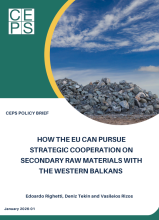
Europe’s green and digital transitions are increasing demand for CRMs, just as geopolitical risks and trade tensions are reshaping global supply chains. The EU has been taking steps to secure and diversify supplies by building strategic partnerships with resource-rich countries, which includes recovering CRMs from mine waste and tailings.
The Western Balkans region is a natural partner: they are integrated into EU markets and transport networks and have a legacy of old industrial sites and mine tailings.
This study recommends mapping mining waste, linking local actors more closely to EU instruments and initiatives, and using the EU accession process to advance regulatory and administrative alignment on mining, waste management and water protection with the EU acquis.
The conference will explore how advanced AI tools and applications are accelerating the transition towards a circular and sustainable chemical and materials industry.
They are calling for posters: the deadline is 28 January!