Network of local and/or regional authorities

  • As part of the Circular Public Procurement project, the City of Aalborg (Denmark) has established a new innovative approach to buying playgrounds, based on the principles of a circular economy, as well as grounded in a pedagogical understanding of creative play as an important part of a child’s development.

  • Sandrine BOUSQUET
  • About this contact

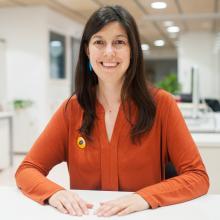
    Mercè Boy Roura is a senior researcher and EU project coordinator at the Governance for Sustainability Unit at the BETA Technological Center, based at the University of Vic – Central University of Catalonia (Spain). She is an environmental scientist with a PhD in Experimental Sciences and Sustainability. She has more than 10 years of international experience in research and knowledge transfer projects in the field of sustainability and circular economy, and in particular focusing on the agri-food systems.

    She is currently coordinating the Innovative Sustainable Economy (ISE) Mission of the Interreg Euro-MED programme, enhancing the legacy of the previous Interreg MED Green Growth community. The current ISE mission has a broader scope embracing innovation capacities – technological, social, institutional – and practices conducive to more sustainable production and consumption in the region, in line with the European Green Deal and European Cohesion Policy priorities and specific objectives. The ISE Mission is a multi-stakeholder network of projects connecting 155 partners from 18 countries in the Mediterranean region, with a well representation of the 4-ple helix stakeholders. It structures its work around four focus areas: Marine resources, Agri-food systems, Industrial Transition, and Resource Valorisation. Also, it supports projects by increasing their impact at policy level and fostering potential transfer and replication of their results in other regions and by other stakeholders. The ISE Mission is labelled by the Union for the Mediterranean (UfM), acknowledging its potential to advance cooperation in the transition to a green and circular economy in the Mediterranean region.

  • The Climate Pact was initially set up by Luxembourg's Ministry of Sustainable Development and Infrastructure. The goal was to enable municipalities wishing to tackle climate change to request State support by signing an engagement charter. 

    The Climate Pact 2.0 is operated by the Ministry for the Environment, Climate and Biodiversity. It includes measures on greenhouse gas reduction, energy efficiency, renewable energy, air quality, the circular economy and climate change adaptation.

  • London
    Type of organisation or company
    Country
    United Kingdom
    Language for original content
    Key Area
    Scope

    ReLondon is a partnership of the Mayor of London and London’s boroughs which aims to improve waste and resource management in the capital and accelerate its transition to a low-carbon circular city. 

    Generally, it wants to help London waste less and reuse, repair, share and recycle more.

  • Symbi Interreg EU
    María García Bernítez Jaramillo
  • Type of organisation or company
    Country
    Belgium
    About this contact

    Dorthe Nielsen, policy director at EUROCITIES, is responsible for the overall coordination and delivery of outcomes of the policy work in EUROCITIES. She focuses on sustainable urban mobility and green and smarter cities. She is also in charge of governance-related matters, including the urban agenda for the EU and creative citizenship. She previously worked for the Greater London Authority (EU office) and at the Secretariat General of the European Commission. She holds a Masters degree from the College of Europe (BE) in European politics and a Masters degree in public administration from the University of Roskilde (DK). A Danish national, she is fluent in English and French.

    EUROCITIES is the leading network of more than 140 major European cities, working together to improve the quality of urban life. It strives for a Europe where cities are genuine partners with the EU to create a better future. It puts individuals at the heart of developments to achieve inclusive, prosperous and healthy cities with future-fit local governments. It works to connect EU and local policy developments in areas such as climate, environment, mobility, economic development, social affairs, culture, digital transformation and urban development. The circular economy cuts across all those areas of work.

  • Type of organisation or company
    Country
    Belgium
    About this contact

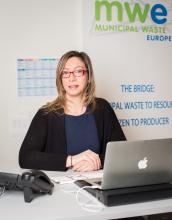
    Municipal Waste Europe is the European umbrella association representing public responsibility for waste.

    The members are national public waste associations and similar national or regional associations. They are committed to sustainable waste management that minimises the impact of waste on the environment and promotes resource efficiency, taking into account local conditions. Municipal Waste Europe promotes the interests of its members at European level, through joint positions on waste management issues and legislation and keeps its members informed on the latest EU policy developments. The association encourages the sharing of information among its members, including the exchange of good practice in the local management of waste.

    Waste management services are a crucial aspect of the social responsibility for the environment and public health in Europe. This service, including collection and treatment systems, is best developed at national, regional and local level. For these reasons and also for the reason of continuity in the delivery of this indispensable service, regardless of market forces, Municipal Waste Europe promotes waste management as a service of general interest.

  • About this contact

    The Association of Cities and Regions for sustainable Resource management is an international network of cities and regions sharing the aim of promoting a sustainable resource management, through prevention at source, reuse and recycling, and accelerating the transition towards a circular economy on their territories and beyond. The network currently counts about 100 members, mainly local and regional authorities as well as national networks of local authorities representing around 1100 municipalities. ACR+ is directly represented in 23 countries of the European Union, and the network can also rely on members in Morocco, Tunisia, Egypt, Palestine and Jordan

    Francesco LEMBO is Managing Director at ACR+, overseeing programs and projects, and ensuring that strategic plans and realistic objectives are in place and monitored. His key duties include fundraising, marketing, community and stakeholders’ outreach. He has over ten years of experience in supporting public administrations, SMEs, employers' associations, NGOs and universities in the design and management of international programs on lifelong learning and sustainable development. He has been advocating for the active involvement of citizens in the development of local and EU policies and the dissemination of inclusive educational models, also designing training programs focused on sustainable development and social inclusion. He wrote about inclusive pedagogy and recognition of prior learnings, and circular economy education. He has a Bachelor in contemporary history, and then followed MA studies in Lifelong Learning Sciences.

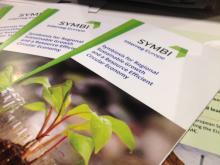
  • The SYMBI project helped improve the implementation of regional development policies and programmes related to the promotion and dissemination of industrial symbiosis and the circular economy.

    Its website describes various projects based on industrial symbiosis.