Administrative and support service activities

  • Bassin de Thau
    Adeline Rumpler
  • About this contact

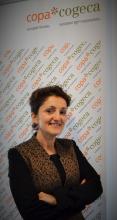
    Oana Neagu is Director of the General Affairs team at Copa Cogeca. The team covers topics related to the circular and bio-economy, the environment and climate change, research and innovation, food waste, etc. Oana is an agricultural engineer and has a Master’s degree in business administration. She previously worked at the European Commission’s Directorate-General for Agriculture as a policy officer, in charge of managing market measures. Prior to joining the Commission in 2006, she was the adviser on European integration at the Ministry of Agriculture in Romania, and was involved in preparing Romania’s accession to the European Union.

    She is a member of the management committee of the multi-stakeholder platform on the implementation of the Sustainable Development Goals in the EU and actively involved in various expert groups on the bioeconomy, forestry and rural development.

    Copa and Cogeca are the united voice of farmers and agri-cooperatives in the EU. Together, they ensure that EU agriculture is sustainable, innovative and competitive, guaranteeing food security for half a billion people throughout Europe. Copa represents over 23 million farmers and their families whilst Cogeca represents the interests of 22 000 agricultural cooperatives. They have 66 member organisations from the EU Member States. Copa and Cogeca are among the founding members of the European Bioeconomy Alliance.

  • About this contact

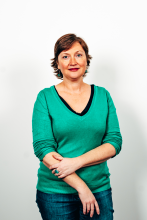
    Neva Nahtigal is the Director of RREUSE. In addition to day-to-day management, she is involved in the organisation’s strategic development and leads its policy team. Neva worked internationally as a policy, research and communications consultant specialising in social and economic justice, sustainability and human rights. She then spent six years in the international office of a global civil society network focusing on improving working conditions in the garment industry before joining RREUSE in May 2023. She holds Masters degrees in Media Studies and Public Policy.

    RREUSE is an international network representing social enterprises active in the field of re-use, repair and recycling. Drawing on the first-hand experience of its members, RREUSE's mission is to ensure that policies, innovative partnerships and the sharing of best practices promote and develop the role of social enterprises in the circular economy. RREUSE's vision for Europe is built around circular activities that foster social value and create locally inclusive jobs whilst supporting vulnerable individuals. 

    RREUSE has 31 members across 29 European countries and the USA.

  • About this contact

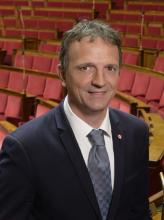
    François-Michel Lambert is a Member of Parliament, having been elected in the 10th constituency of the Bouches-du-Rhône (Southern France).

    He is a member of the Sustainable Development and Country Planning Commission at the National Assembly, and also holds the position of president of the France-Cuba Friendship group at the National Assembly.

    He is founding president of the Institute for Circular Economy, a multi-stakeholder association composed of 200 members, companies, communities, NGOs and schools that defines and implements a transformation of our economic model to emerge from a society of waste and move towards the development of an economy focused on the preservation and efficient use of resources. The Institute has become the French reference and the main partner of the public authorities.

    Mr Lambert received the Marianne d'Or award for sustainable development for his proactive action to bring about a shift towards a circular economy.

  • About this contact

    FEAD is the European Federation representing the European waste management industry. FEAD’s members are national waste management associations covering 19 Member States, Norway and Serbia. They have an approximate 60% share in the household waste market and handle more than 75% of industrial and commercial waste in Europe. Their combined annual turnover is approximately €75 billion. FEAD represents about 3000 companies with activities in all forms of waste management. These companies employ over 320 000 people who operate around 2400 recycling and sorting centres, 1100 composting sites, 260 waste-to-energy plants and 900 controlled landfills. They play an important role in determining the best environmental option for waste management problems.

  • Reparaturnetzwerk Wien
    Type of organisation or company
    Country
    Austria
    Language for original content
    Key Area
    Scope

    Increasing the demand for repair services and networking for repairing companies.

  • About this contact

    At the European Environmental Bureau (EEB), Jean-Pierre is the policy officer responsible for Product Policy and Circular Economy.

    The EEB is Europe’s largest network of environmental citizens’ organisations with around 140 organisations in more than 30 countries. Jean-Pierre has a Master's degree in Environmental Policy from Humboldt University Berlin and in Geography from the University of Oxford.

    Prior to joining the EEB, Jean-Pierre worked for four years at the Institute for European Environmental Policy (IEEP) in Brussels, as part of their Green Economy programme where he specialised in plastics, market-based instruments and economic indicators. At IEEP, he published a number of reports on a range of environmental issues for the European Commission, the European Parliament, UN Environment and the OECD.

  • Type of organisation or company
    Country
    Belgium
    EU
    About this contact

    As an adviser for environmental and climate policy, Leon de Graaf particularly follows policies related to the circular economy, trade and climate, low-emission mobility, implementation of the Paris climate agreement (COP21) and the European emission trading system (EU ETS). He is also deputy manager of BusinessEurope's corporate Advisory and Support Group (ASGroup). Prior to joining BusinessEurope, Leon worked at the research consultancy Ecorys, focusing on renewable energy and international development issues, at DG COMP on energy and environmental subsidies in Europe, and at the Dutch Environmental Assessment Agency (PBL) on indirect ETS costs for energy-intensive industries. Leon has a MSc in environmental economics and climate change from the London School of Economics, and a BSc in business economics from the University of Groningen.

  • About this contact

    Ladeja Godina Košir, Founder and Executive Director of Circular Change, is an internationally renowned expert on the circular economy, speaker, (co)author of several CE reports and articles, and co-creator of international circular economy events. Ladeja was the finalist for the Circular Leadership Award 2018 (Davos WEF) and named in "The #EUwomen4future campaign” featuring extraordinary women active in research, innovation, education, culture and sport by Mariya Gabriel, European Commissioner for Innovation, Research, Culture, Education and Youth in 2020. She is recognised as the regional "engine of circular economy transition". She is co-author of the first Roadmap towards the Circular Economy and creator and team leader of the annual international Circular Change Conference. Ladeja has consulted on the national circular economy roadmapping process based on stakeholder engagement for several countries and cities (Serbia, Montenegro, Norway, Israel, Chile, etc.).

    Ladeja has several international roles: chair of the coordination group of the European Circular Economy Stakeholder Platform (ECESP) in Brussels (2018/20), visiting professor at Doshisha University in Kyoto and co-leader of the Research Group Circular Economy Systems at the Bertalanfy Center for the Study of Systems Science (BCSSS) in Vienna.

    Ladeja takes a transdisciplinary systemic approach and holistic view as an entrepreneur, communications professional, speaker, moderator, lecturer, mentor and passionate connector. She is empowering a new narrative and circular culture. She bridges the bioeconomy and the circular economy; one of the EU projects to which she contributes is Effective (Horizon 2020 & BBI JU), a multi-company collaboration to produce more sustainable, bio-based fibres and plastics for large consumer products using renewable feedstocks and innovative technologies. She also chairs the expert group for the BIOeast Foresight Exercise 2050. Ladeja works with governments, city authorities, companies, NGOs, media and universities, empowering true collaboration to enable circular change.