Mexico Circular Hotspot will take place on 5-6 November. It will focus on bringing together stakeholders from business, governments and knowledge institutions to advance the circular economy in Mexico and the Americas.
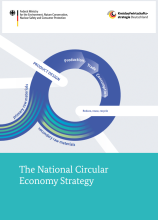
Germany's National Circular Economy Strategy adopts a strategic vision focused on reducing the consumption of primary raw materials. This approach is guided by the proposal from the International Resource Panel, under the United Nations Environment Programme (UNEP), which sets a global target of 6-8 tonnes of raw material consumption per capita per year by 2050.
The strategy considers every stage of the cycle: product design, material selection, production, maximising the use phase and, finally, reuse and recycling. It aims to prevent waste from being created in the first place. This can be achieved through smart product design, efficient manufacturing, extended product lifespans, easier repairability and maximising the recycling of all materials.
WCEF2025 reaffirmed the circular economy as a cornerstone of the regenerative economy and a vital strategy for decoupling well-being from resource use, placing the production sector at the centre of the transition. Read the summary to see what was discussed and shared there!
The ECESP Leadership Group on Textiles organised the #EUCircularTalks event on Circular textile policies: implementation, challenges and the role of the Circular Economy Act.
This webinar aimed to assess the state of play of circular textile policies in the EU, examining progress made, existing gaps and next steps.
The Paris Call for the Reuse Economy aims to form a community working to make reuse the rule, rather than the exception. It calls on people who believe in the power of the reuse economy as a driver of resilience, value creation and economic sovereignty. Do you agree? Then sign it!
This session will explore the impacts of the EU's “clean, competitive and circular” policies on communities, including indigenous peoples and young people, and consider how to foster intergenerational equity and participation, starting from the raw materials agenda.
This webinar will address the development of social innovation action plans and their deployment and application. Come and gain insights from experts, projects and cities leading systemic change through social innovation!
As the EU seeks to advance its transition towards circular economy, civil society organisations – backed by academic insights – are calling for a bioeconomy strategy that places sustainability, environmental resilience and social well-being on an equal footing.
This paper provides a multi-actor perspective to the challenges involved, focusing on sustainability, economic development (especially in rural areas) and regulatory frameworks. It highlights gaps in the existing strategy and proposes policy recommendations for policymakers and research institutions.
The European Union’s Bioeconomy Strategy is at a pivotal point of revision.
As the EU seeks to advance its transition towards circular economy, civil society organisations – backed by academic insights – are calling for a bioeconomy strategy that places sustainability, environmental resilience and social well-being on an equal footing.
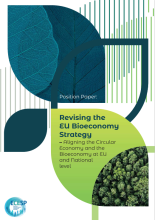
This paper, prepared by the ECESP's Leadership Group on Bioeconomy, provides a multi-actor perspective. It focuses on sustainability, economic development (especially in rural areas) and regulatory frameworks. It highlights gaps in the existing strategy and proposes policy recommendations for policymakers and research institutions.
EU policies require effective data and analyses, which are provided by Eurostat. This data is extremely useful for seeing how waste and the circular economy in the EU are evolving. Eurostat data on food waste, packaging and municipal waste paint a vivid picture. Part of it is good, other parts definitely less so.