This webinar brings together experts and representatives of EU institutions and local initiatives to discuss the latest policy developments and practical solutions. It will spotlight how territorial cooperation helps drive innovation and sustainability across Europe.
Come and see how cooperation across borders can deliver tangible impact - and how these efforts can shape the future of EU environmental and economic policies!
How can the circular economy in the built environment drive climate change mitigation?
During this EU Green Week partner event, experts and stakeholders from three Horizon Europe projects – CIRCOMOD, CircEUlar and CO2NSTRUCT – will discuss innovative circular approaches that can transform the sector.
Join this EU Green Week Partner Event to learn more about Miele’s sustainable manufacturer approach, how MediaMarktSaturn, Europe’s largest electronics retailer, is integrating sustainability and circularity, and the innovative Repartly repair and refurbishment concept which closes the loop and extends the lifecycle of devices.
Join PACCT for Sustainability for its EU Green Week Partner Event!
PACCT's new policy brief setting out recommendations for the Circular Economy Act will be presented first, followed by a Q&A session. If you're attending in person, you can also join the open discussion and networking.
It has organised its operations in line with the principles of circular economy and industrial symbiosis in order to minimise inputs and waste while ensuring that the final product is tasty and healthy.
The co-chairs of the International Resource Panel have issued a call for action for 21st Century Global Materials Stewardship. They feel that international organisations need to become proactive stewards of sustainable material use and the circular economy. Agree? Then sign it!
Imagine a world where nothing goes to waste and nature is thriving. It's a nice thought, isn't it? The good news is, you can help make this world a reality!
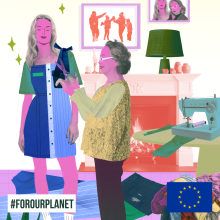
This year, the #ForOurPlanet campaign is encouraging everyone to join the circular economy! It doesn’t take much. Just stop to think before you bin it – whether it’s last season’s jumper or the old fridge making a new noise.
REuse Economy Expo is a European trade fair that connects up players and solutions to co-construct and develop economic models for reuse.
With over 300 solutions, 70 conferences, masterclasses and workshops, and more than 3 000 expected visitors, this two-day event is designed to help organisations take steps towards integrating reuse in their operations.
The PlastTalk webinar series brings together individuals interested in the circular economy of plastics. It highlights current phenomena and disseminates good circular economy practices. The speakers are researchers and experts in the circular economy, and each webinar features interesting circular economy actors and practical examples.
This webinar will explore one of the most crucial strategies for tackling plastic waste: reuse.
This year the EU Green Week 2025 will take place in Brussels on 3-5 June, focusing on circular solutions for a competitive EU. During the Stakeholder event on 5 June, several stands will be available, allowing stakeholders to showcase good practices, concrete initiatives or circular business models.