The CCRI hands-on online workshops will focus on a key implementation challenge identified in the CCRI communities of practice. They will translate those insights into practical tools, methods and examples that participants can apply in their own context.
This session will focus on how planning can support the reuse of existing assets, limit land take, reserve space for circular activities and create the right conditions for circular design and material use in new developments.
The CCRI hands-on online workshops will focus on a key implementation challenge identified in the CCRI communities of practice. They will translate those insights into practical tools, methods and examples that participants can apply in their own context.
This session is based on the community of practice Supporting local circular businesses. It will focus on designing support measures for circular businesses that work in practice.
Cities and regions across Europe are facing similar challenges - at different stages and in different contexts - when implementing the circular transition. Over the past year, CCRI communities of practice have brought practitioners together to openly share what works, what doesn’t, and where they get stuck.
This CCRI online workshop series builds directly on these insights, turning peer exchange into practical, hands-on sessions designed to help you move from ambition to concrete actions - no matter where you are in your transition.
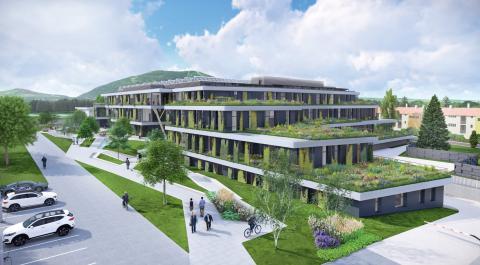
CirkArena is an R&D and business platform dedicated to innovation in the circular economy, with a focus on waste valorisation, specifically industrial waste (the mining and metallurgical industry used to be part of the local economy), biowaste and construction waste.
It offers a comprehensive range of services, including consultancy, circular audits, EU compliance advisory, specialised R&D projects, and education and training.
Supported by a strong network of partners across Czechia, it actively works with institutions worldwide and is open to expanding partnerships and exploring new opportunities for cooperation.
The MAGNO project aims to promote the adoption of solutions reducing the impact of plastic food packaging pollution in ecosystems.
In order to achieve this, it is designing ecosystem digital twin software which enables innovative ideas to be tested and refined before being implemented in the real world.
Looking for projects developed by students from universities and vocational training centres across Europe!
Projects must demonstrate innovation in business models, products, services or industrial processes under circular economy criteria, and have real potential to develop new business opportunities.
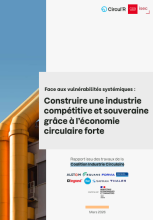
The Circular Industry Coalition, led by Circul’R and CEA ISEC with the support of the French Ministry of Economy and Finance, brings together nine major industrial companies to address the growing systemic risks facing European industry.
After a year of collective work, the coalition has published a report highlighting the limits of the linear model and positioning a strong circular economy as a strategic lever for competitiveness, resilience and industrial sovereignty.
The report provides a shared assessment of industrial vulnerabilities and an operational roadmap to accelerate circular transformation at scale.
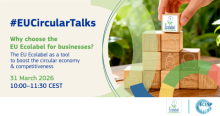
On 31 March, the EU Ecolabel, in conjunction with the ECESP, organised an EU Circular Talk on how the EU Ecolabel acts as a ready-to-use tool helping businesses deliver circularity, meet rising legislative expectations, and gain a competitive edge across EU markets.
The Rethinking Materials Summit will bring together brands, innovators, investors and policymakers to explore the next frontier of materials innovation.
It is an opportunity for targeted networking, curated deal flow, live pitches and fresh tech discovery across the value chain.