It has been established that the circular economy has a high leverage effect and some progress in this field has been made, but the circular economy has yet to top the political agenda. A strategic approach to circularity is urgently needed and should be developed, managed and implemented in a cross-ministerial capacity in line with efforts at EU level and together with partner nations.
Against this backdrop, the German Council for Sustainable Development (RNE) recommends organising the transition to circularity via a new, cross-ministerial governance mechanism coordinated by the German Federal Chancellery. RNE’s statement covers a further 13 recommendations, ranging from the need for social safeguarding instruments to expanding education and research.
The Incubation Forum for Circular Economy in European Defence aims to apply the circularity approach of the EU Green Deal to European defence.
It does this by engaging a cooperative community, including EU defence ministries, industry, institutes, research centres, financial institutions, academia and other bodies at national and international level.
Working groups called "Project Circles" cover the following themes:
Critical Raw Materials
Circular Additive Manufacturing
Circular Materials for Textiles
Sustainable Ecodesign
EMAS Uptake Strategy
Green Procurement
Circular Data
Spare Parts Management.
Based on circular economy principles, IF CEED aims to incubate collaborative projects and their respective consortia.
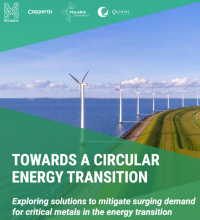
Concern continues to grow regarding the availability of critical metals. Such rare or scarce metals, like lithium or cobalt, are not only vital to the world’s major economies. They are also crucial for a transition to a renewable energy system in the Netherlands. At current levels, the global supply of these metals is insufficient, and the Dutch demand for them is no exception.
This study Towards A Circular Energy Transition serves to provide insight into the demand for critical metals domestically over the next few decades, to offer perspectives on how to reduce this demand, and to demonstrate the opportunities these new measures present to industry in the Netherlands.
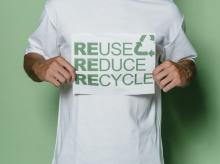
The goal of the circular economy is to take full advantage of all available resources through reducing, reusing, repairing and recycling. The recent Nordic Circular Summit in Copenhagen covered topics from public administration programmes to innovative techniques and renewable practices in the marine and food industries.
What can we learn about the circular economy from the Nordic perspective? Find some answers in this position paper.
Although previous researchers have explored the circular economy practices of different businesses in various contexts, only a few papers have focused on the sustainable preparation and consumption of food in the tourism and hospitality industry. This paper sheds light on case studies from hotels, restaurants and cafés that are located in urban tourism destinations.
This research suggests that catering businesses can implement a number of responsible initiatives by introducing preventive measures and recycling practices to curb food loss and the generation of waste. In conclusion, it finds that there is scope for regulatory authorities and policy makers to encourage hospitality practitioners to minimise food waste.
The submission deadlines for LIFE calls for proposals 2022 have been communicated. All LIFE Calls for proposals 2022 are expected to be published on the Funding & tender opportunities portal on 17 May 2022.