This paper by ENEA focuses on circular economy in the construction sector, by illustrating the main market dynamics related to materials for buildings and infrastructures, and active and/or potential value chain collaborations in a circular and industrial symbiosis perspective.
The paper offers an overview of:
the relevance of construction and infrastructure value chains within the EU economy,
their potential for circularity, resource efficiency and decarbonisation and
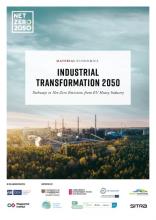
There is an intense debate about how to close the gap between the current climate policy and the aim of the Paris Agreement to achieve close to net-zero emissions by mid-century. The materials and chemicals that heavy industry produces are essential inputs to major value chains: transportation, infrastructure, construction, consumer goods, agriculture.
Material Economics' study starts with a broad mapping of options to eliminate fossil CO2-emissions from production, including many emerging innovations in production processes. It also integrates them with the potential for a more circular economy: making a better use of the materials already produced and so reducing the need for new production.
Each year, humanity consumes resources equivalent to 1.7 planets. Sustainable resource use is therefore essential if we are to achieve our national environmental and climate objectives and the sustainable global development goals in the 2030 Agenda.
RE:Source is a strategic innovation programme co-funded by the Swedish Agency for Innovation Systems (Vinnova), the Swedish Research Council for Environment, Agricultural Sciences and Spatial Planning (Formas) and the Swedish Energy Agency. The programme focuses on research and innovation in sustainable material use.
Within RE:Source, the RE:Agenda describes the innovation area of sustainable use of resources, which aims to support solutions that contribute to the efficient use of the earth’s resources within the planetary boundaries.
AIMPLAS, the Plastics Technology Centre, has now completed the fourth and final year of the RepescaPlas project. The project has developed a complete management system for plastic waste recovered from the sea and subsequent recycling into products of commercial value.
In 2022, the Procura+ Awards, an ICLEI – Local Governments for Sustainability initiative, will for the first time feature a category on "Circular Procurement of the Year". The deadline for submitting applications is 31 March 2022.
Clear Fashion, independant expert of garment evaluation, is a solution that informs consumers on brands' practices and clothes' impact, and enables fashion brands to communicate their scores, in order to bring more transparency in the fashion industry.